
The Evolution of Safety Training: Online, Virtual, and In-Person Learning
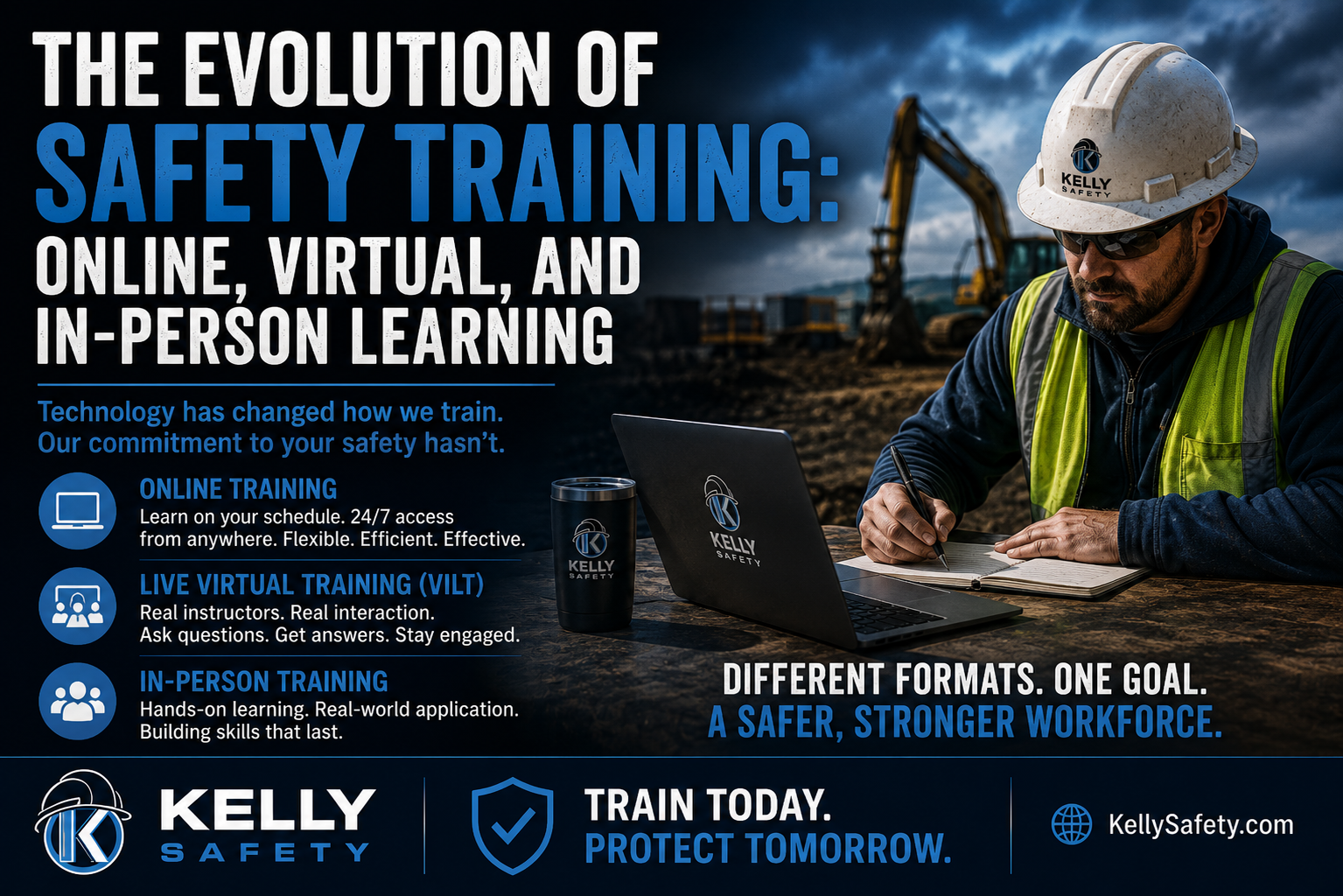
Technology has transformed how safety training is delivered, giving contractors more flexibility and access than ever before. Online learning, Live Virtual Instructor-Led Training (VILT), and traditional classroom instruction each serve a valuable purpose, allowing companies to choose the training format that best fits their workforce, schedule, and operational needs.
8–9 Minute Read
Safety training has changed dramatically over the last two decades
Not long ago, workforce training looked very different than it does today.
If a contractor needed OSHA training, MSHA training, or professional development opportunities, employees were often required to travel to a classroom, spend time away from projects, and coordinate schedules around a limited number of available courses. For many companies, training meant lost production time, travel expenses, hotel costs, and significant logistical planning.
That model worked because it was often the only option available.
Today, technology has transformed how training is delivered, managed, and accessed. Contractors can complete training online, attend live virtual classes from almost anywhere, or participate in traditional instructor-led courses depending on their needs.
The result is a workforce that has greater access to training than at any point in history.
Technology has made training more accessible than ever
One of the biggest challenges contractors have always faced is balancing training requirements with operational demands.
Projects continue moving forward. Clients expect deadlines to be met. Crews are spread across multiple locations. Supervisors are managing schedules, manpower, equipment, and production goals simultaneously.
Technology has helped close the gap between training requirements and operational realities.
Today, workers can complete many courses without extensive travel or lengthy interruptions to their schedules. Training can happen from a jobsite trailer, office, conference room, home office, or virtually anywhere with an internet connection.
This flexibility has made workforce development significantly more achievable for companies of all sizes.
Online learning has transformed workforce development
Online learning has become one of the most significant advancements in modern safety training.
For contractors, the benefits are easy to understand. Employees can access training when it fits their schedule. New hires can begin onboarding quickly. Companies can train workers across multiple locations while maintaining consistency throughout the organization.
Online courses also provide flexibility that many modern workforces need. Employees learn at their own pace, revisit material when necessary, and complete training without the scheduling challenges often associated with traditional classroom environments.
Most importantly, online learning has expanded access. Workers who may have previously struggled to attend in-person courses due to location, scheduling conflicts, or travel costs can now access professional training opportunities much more easily.
Technology has not replaced learning. It has expanded access to it.
Live virtual training bridges the gap
While online learning continues growing, many contractors still value interaction with experienced instructors.
That is one reason Live Virtual Instructor-Led Training, commonly known as VILT, has become increasingly popular across construction, mining, and industrial industries.
Live virtual training combines many of the benefits of traditional classroom instruction with the convenience of remote attendance. Employees participate in scheduled sessions, engage with instructors in real time, ask questions, and interact with other participants without the need for extensive travel.
For subjects that benefit from discussion, interpretation, and instructor feedback, VILT provides a valuable option that blends flexibility with engagement.
Instead of choosing between convenience and interaction, contractors can often have both.
In-person training continues to play an important role
Despite advancements in technology, traditional classroom training remains an important part of workforce development.
Certain topics benefit greatly from face-to-face instruction, hands-on demonstrations, equipment interaction, and practical exercises. Site-specific training, equipment operation, field demonstrations, and certain technical subjects often become more effective when participants can physically interact with the environment and equipment involved.
In-person training also creates opportunities for networking, collaboration, and discussion that can be valuable in certain learning environments.
The continued success of classroom instruction demonstrates that technology has expanded training options rather than eliminating traditional methods.
The future is not one format replacing another
One of the most common misconceptions about training technology is that one delivery method will eventually replace all others.
The reality is much different.
Online learning, virtual instruction, and classroom training each serve a purpose. Different organizations have different needs. Different workers learn differently. Different subjects benefit from different delivery methods.
The goal is not choosing a single format.
The goal is selecting the format that best supports the workforce, the subject matter, and the operational needs of the organization.
The companies seeing the greatest success are often the ones using multiple training methods to create a flexible and effective learning strategy.
Contractors now have more choices than ever before
For growing contractors, flexibility has become increasingly valuable.
Some employees may benefit from self-paced online learning. Others may need the interaction of a live instructor. Certain topics may require hands-on demonstrations or field-based instruction. The ability to select the most effective training format for each situation creates opportunities that simply did not exist a generation ago.
Technology has removed many of the barriers that once limited access to workforce development.
Training is no longer defined by geography, travel requirements, or classroom availability. Companies can develop employees, maintain compliance, and support professional growth through a variety of learning methods that fit their operational realities.
That flexibility benefits both employers and workers.
Better access leads to better opportunities
At its core, safety training is about more than compliance.
Training creates opportunities. It helps workers develop skills, understand hazards, build confidence, and advance their careers. It helps companies maintain safe operations, improve consistency, and meet client expectations.
The easier training becomes to access, the greater the opportunity for workers and organizations to benefit from it.
Technology has helped make that possible.
Whether training is completed online, through a live virtual classroom, or in person, the objective remains the same: helping people gain the knowledge they need to work safely and successfully.
A Final Thought From the Field
The evolution of safety training is not a story about one format replacing another.
It is a story about accessibility.
Online learning has expanded opportunities for workers across the country. Live virtual instruction has brought experienced instructors directly into offices, conference rooms, and jobsites. Traditional classroom training continues providing valuable hands-on learning experiences where they are needed most.
Together, these options have created a training environment that is more flexible, more accessible, and more effective than ever before.
For contractors, that means more opportunities to train employees, develop skills, maintain compliance, and support growth without being limited by the barriers that once made training difficult to access.
And that is a positive development for the entire industry.