
Why Confined Spaces Remain One of the Most Dangerous Work Environments on Any Jobsite
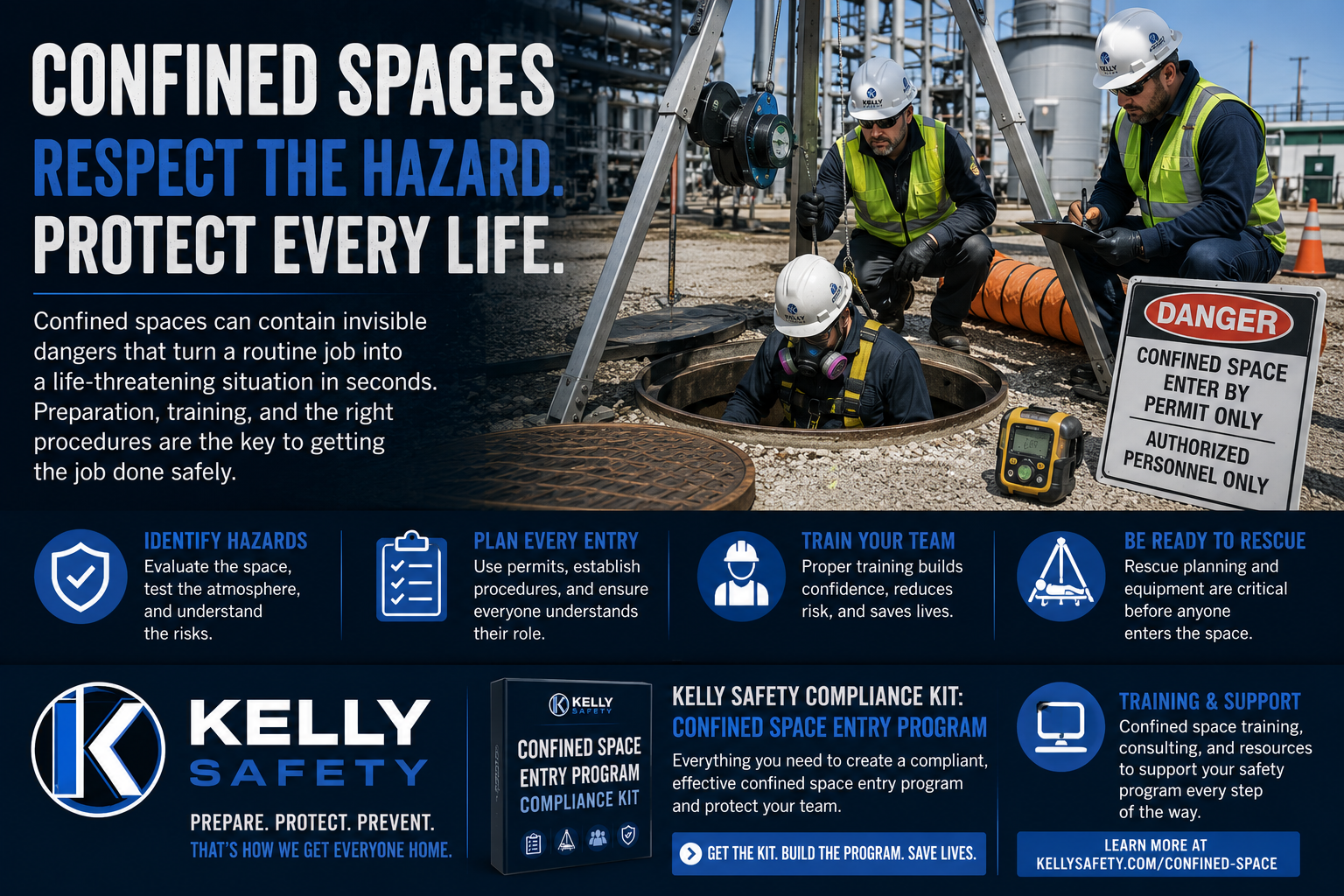
Confined spaces remain one of the most dangerous work environments in construction, mining, and industrial operations because many of the hazards cannot be seen. Atmospheric hazards, engulfment risks, energized equipment, and difficult rescue situations can quickly turn routine work into a life-threatening emergency.
8–9 Minute Read
Few workplace hazards demand more respect than confined spaces.
Whether it is a tank, vault, manhole, pit, crawl space, boiler, or process vessel, confined spaces continue to present some of the highest-risk environments in construction, mining, manufacturing, and industrial maintenance. What makes these spaces particularly dangerous is that many of the hazards cannot be seen. A space may appear safe from the outside while containing atmospheric conditions capable of incapacitating a worker within seconds. OSHA continues to recognize confined spaces as one of the most serious workplace hazards because of the potential for asphyxiation, toxic exposure, engulfment, fire, explosion, and difficult rescue situations.
Many Confined Space Incidents Begin with a Simple Assumption
One of the most dangerous phrases heard on jobsites is:
"We've been in there before."
Experience can create confidence, but it can also create complacency.
A tank that was safe yesterday may contain hazardous atmospheres today. Equipment that was isolated during previous work may now be energized. Ventilation conditions may have changed. Process residues may have introduced new hazards that were not present during prior entries.
Confined spaces are dynamic environments. Conditions can change rapidly, which is why every entry should be approached as a new exposure requiring evaluation, planning, and verification.
Many serious incidents occur not because workers intentionally ignored procedures, but because assumptions replaced verification.
The Hazard You Cannot See Is Often the Most Dangerous
When most people think about confined spaces, they immediately picture tight working conditions or difficult access.
The greater danger is often atmospheric.
Hazardous atmospheres can contain oxygen-deficient conditions, toxic gases such as hydrogen sulfide, flammable vapors, or contaminants that quickly overwhelm workers without warning. In some cases, workers may not even realize they are being exposed until it is too late.
This is precisely why atmospheric testing, ventilation, and continuous monitoring play such a critical role in confined space entry programs. OSHA defines permit-required confined spaces as spaces containing actual or potential hazards such as dangerous atmospheres, engulfment hazards, converging walls, or other serious safety and health risks.
The fact that these hazards are often invisible is what makes confined space work so unforgiving.
Rescue Can Quickly Become a Secondary Emergency
One of the most tragic aspects of confined space incidents is that they frequently involve multiple victims.
A worker becomes unresponsive, and a coworker immediately enters the space in an attempt to help. Without proper respiratory protection, atmospheric information, or rescue planning, the rescuer is often overcome as well.
This pattern has repeated itself throughout countless confined space incidents over the years.
Good intentions alone are not enough.
Confined space rescue requires planning, equipment, communication, and trained personnel. Before any entry begins, workers should already know exactly how an emergency would be managed and how an entrant would be removed from the space if conditions deteriorate.
The question should never be asked after something goes wrong.
It should be answered before anyone enters the space.
Documentation Is Not Paperwork. It Is Risk Management.
Many contractors still view confined space permits and written programs as administrative requirements.
In reality, they are risk management tools.
A properly developed confined space entry program helps organizations identify hazards, establish responsibilities, verify atmospheric testing, define rescue procedures, and ensure workers understand expectations before work begins.
Documentation also creates consistency.
Different supervisors, different crews, and different projects should not result in different approaches to confined space safety. A standardized program helps ensure that critical steps are not overlooked simply because operations become busy or personnel change.
In high-risk environments, consistency saves lives.
Confined Space Requirements Continue Expanding
Clients and site owners increasingly expect contractors to demonstrate competency in confined space management before work begins.
Written programs, training records, permits, atmospheric monitoring procedures, rescue planning, and employee qualifications are frequently requested as part of contractor qualification processes.
This is particularly true in industrial facilities, manufacturing plants, utilities, mining operations, and heavy construction projects where confined space hazards are common.
Contractors who have organized programs and documentation available create confidence.
Those who do not often find themselves scrambling to develop procedures after work has already been awarded.
Preparation remains one of the strongest indicators of professionalism.
Building a Better Confined Space Program
Developing a confined space program from scratch can be overwhelming, particularly for smaller contractors who may not have dedicated safety personnel.
Creating permits, procedures, rescue requirements, training documentation, and written programs requires both time and expertise. Many companies understand what needs to be done but simply lack the resources to build everything internally.
That is one reason Kelly Safety developed the Kelly Safety Compliance Kit: Confined Space Entry Program.
The kit provides contractors with professionally developed documentation and practical tools designed to help organizations implement a structured confined space management system without starting from a blank page.
Learn more about the compliance kit here:
https://www.kellysafety.com/downloads/p/kelly-safety-compliance-kit-confined-space-entry-program
Organizations looking for training, consulting, or additional confined space support can also learn more about Kelly Safety's confined space services here:
https://www.kellysafety.com/confined-space
A Final Thought From the Field
Confined spaces remain one of the few workplace environments where a single mistake can rapidly escalate into a life-threatening emergency.
The hazards are often invisible. Conditions can change quickly. Rescue is difficult. Assumptions become dangerous.
That reality demands planning, preparation, and respect.
The strongest organizations do not approach confined space work casually. They build systems that identify hazards, establish clear procedures, prepare workers, and ensure rescue plans exist long before anyone enters the space.
Because in confined space work, preparation is not simply best practice.
It is often the difference between everyone going home safely and a tragedy that changes lives forever.