
Why Your New Hire's First Day Sets the Tone for Everything That Follows
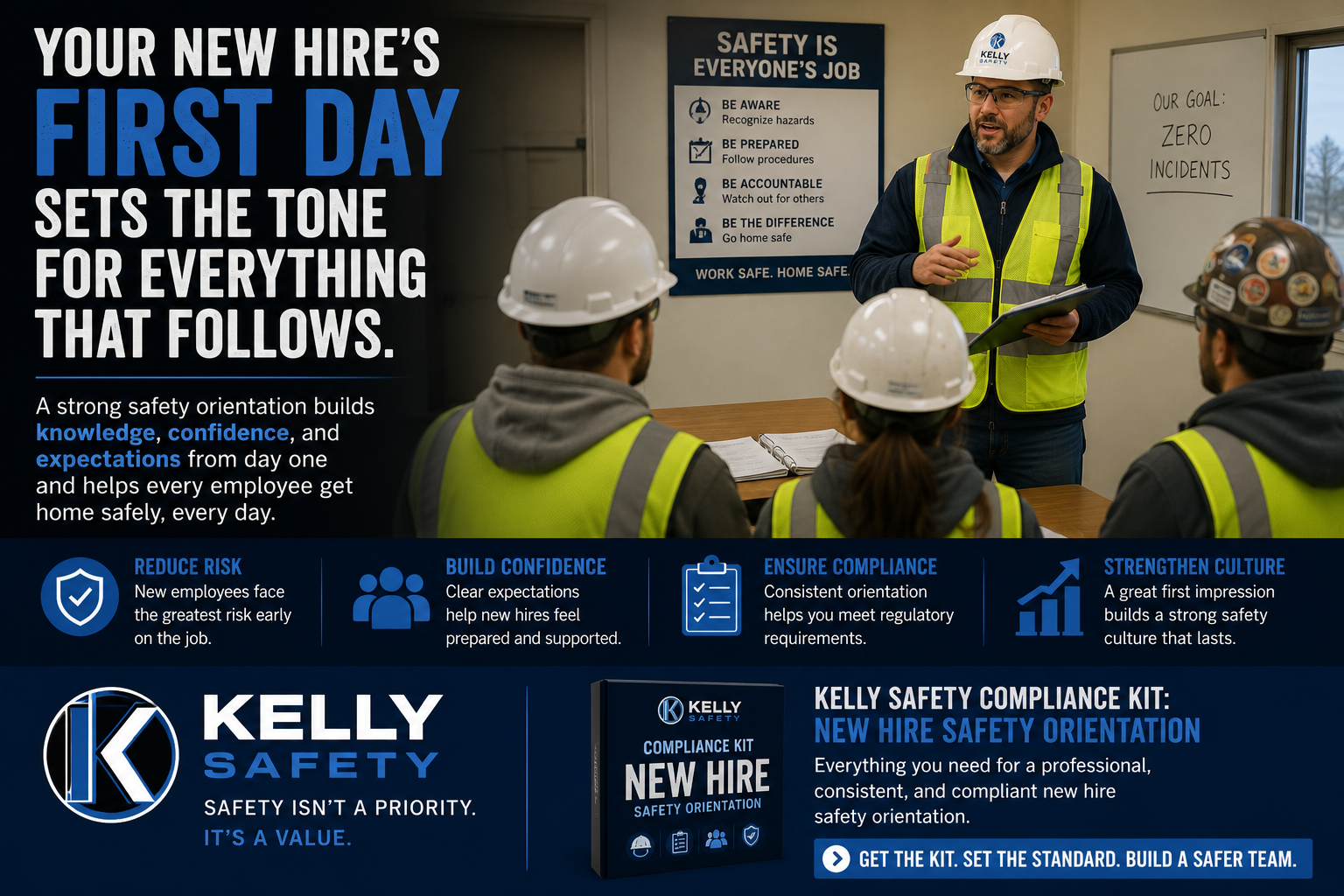
A new employee's first day is one of the most important opportunities to establish your company's safety culture. Effective new hire orientation goes far beyond completing paperwork or meeting compliance requirements.
8–9 Minute Read
The first day on the job is about far more than paperwork, introductions, and issuing a hard hat. For every new employee, it marks the beginning of habits, expectations, and perceptions that often stay with them throughout their employment. The way an organization approaches new hire orientation communicates what matters most, and few things should be communicated more clearly than safety.
Construction, mining, and industrial workplaces present unique hazards that many new employees have never encountered before. Even experienced workers bring habits from previous employers that may not align with your company's expectations. That is why an effective new hire safety orientation should be viewed as one of the most important investments an employer can make. Organizations that establish expectations from day one are far more likely to build safe, productive, and engaged employees over the long term.
New Employees Face the Greatest Risk
One reality has remained consistent across the construction industry for years: employees are more vulnerable during their first weeks and months on the job than at almost any other point in their careers. They are learning unfamiliar work environments, adjusting to new equipment, building relationships with coworkers, and trying to demonstrate that they belong. During that learning period, it becomes much easier to overlook hazards or make assumptions that experienced employees may recognize immediately.
Many incidents involving new employees are not caused by carelessness. They occur because workers simply have not yet developed familiarity with the jobsite, company procedures, or the expectations placed upon them. A thorough orientation helps close that gap by providing the knowledge and confidence employees need before they begin productive work.
Orientation Is More Than a Compliance Requirement
Many companies approach orientation as an administrative task that needs to be completed before an employee can begin working. Forms are signed, videos are watched, policies are reviewed, and the employee is quickly sent into the field.
While compliance is certainly important, orientation should accomplish much more than satisfying documentation requirements.
A well-designed orientation introduces the company's safety culture, explains how hazards are identified and reported, establishes expectations for personal protective equipment, emergency procedures, communication, and accountability, and reinforces that every employee has both the authority and responsibility to stop work if something appears unsafe. These conversations help shape the way new employees think about safety long before they encounter their first challenging situation.
Consistency Builds Confidence
One of the biggest challenges growing contractors face is consistency. Different supervisors often explain expectations differently, documents become scattered across projects, and orientation varies depending on who happens to conduct it that day.
That inconsistency creates unnecessary risk.
Every new employee deserves the same introduction to the company's expectations regardless of which project they report to or who conducts the orientation. A standardized onboarding process helps ensure critical topics are never overlooked while giving supervisors a structured framework they can confidently follow. It also demonstrates professionalism to clients who increasingly expect contractors to have documented onboarding procedures in place before employees ever step onto a jobsite.
Good Orientation Supports Supervisors Too
Supervisors already manage production schedules, manpower, equipment, subcontractors, and client expectations. Expecting them to create a new orientation from memory every time someone joins the company is neither efficient nor realistic.
Providing supervisors with organized orientation materials, checklists, sign-in sheets, and documentation allows them to focus on mentoring employees instead of recreating paperwork. It also improves documentation quality, simplifies recordkeeping, and creates confidence that every new employee has received the same foundational information before beginning work.
Strong systems do not replace good leadership. They allow good leaders to spend more time leading.
Building a Safety Culture Starts Before Work Begins
Safety culture is often discussed as though it develops over years of experience. While culture certainly evolves over time, the foundation is established much earlier than many organizations realize.
It begins the moment a new employee walks through the door.
If orientation feels rushed, disorganized, or treated as a formality, new employees quickly learn that production takes priority over preparation. If orientation is organized, professional, and focused on helping employees succeed, workers develop confidence that safety is genuinely part of how the company operates.
First impressions matter, and few first impressions have a greater influence on long-term performance than a well-executed safety orientation.
Giving Contractors a Better Starting Point
Creating a professional new hire orientation from scratch takes time, and many contractors simply do not have the resources to build one themselves. As businesses grow, the need for consistency, documentation, and repeatable processes becomes even more important.
That is why Kelly Safety developed the Kelly Safety Compliance Kit: New Hire Safety Orientation. The kit provides contractors with professionally developed orientation materials, documentation, and practical resources designed to help standardize the onboarding process while saving valuable time. Instead of starting with a blank page, companies can begin with a structured system that is ready to implement and adapt to their own operations.
Because a strong safety program does not begin with an inspection.
It begins on an employee's very first day.
Learn more about the Kelly Safety Compliance Kit – New Hire Safety Orientation here:
https://www.kellysafety.com/downloads/p/kelly-safety-compliance-kit-new-hire-safety-orientation