
Why the Best Safety Training Is an Investment, Not an Expense
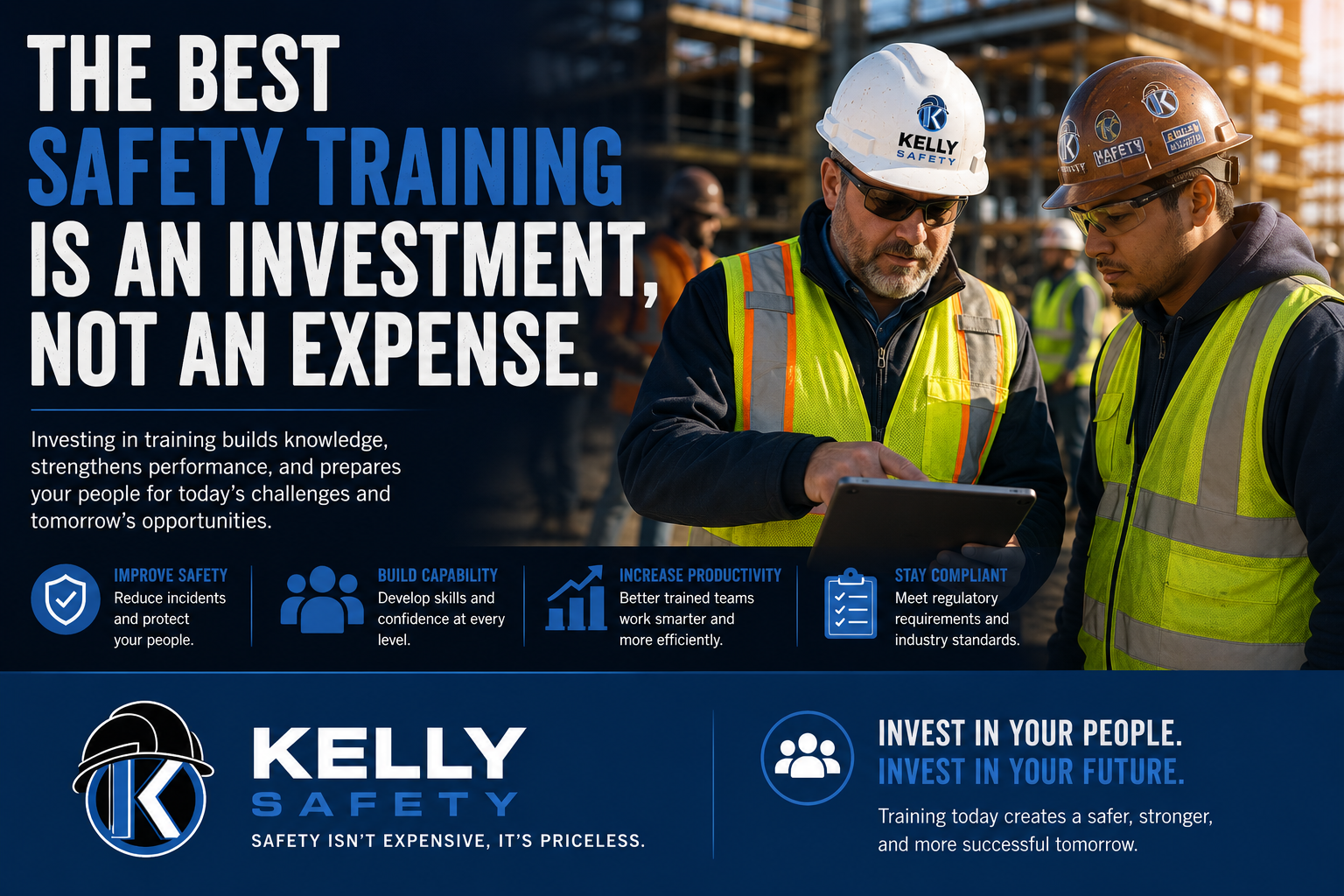
Training is often viewed as a cost of doing business, but the most successful organizations see it differently. Effective safety training does more than satisfy compliance requirements. It builds knowledge, develops confidence, improves decision-making, and prepares employees for future opportunities.
8–9 Minute Read
Every contractor has heard the phrase, and most have probably said it themselves: "Our people are our greatest asset."
It is a statement that reflects a fundamental truth about construction, mining, and industrial operations. Equipment can be purchased. Facilities can be expanded. Technology can be upgraded. None of those investments, however, can replace a knowledgeable workforce capable of making good decisions, recognizing hazards, and performing work safely and efficiently.
Despite this, training is often one of the first areas scrutinized when budgets tighten. Courses are delayed, development plans are postponed, and training is reduced to the minimum required for compliance. While the reasoning is understandable, it often overlooks the broader role training plays in the success of an organization. The most successful companies do not view training as an expense to be minimized. They view it as an investment that produces returns long after the course is complete.
The Value of Training Extends Beyond Compliance
There is no question that OSHA, MSHA, and other regulatory requirements make training necessary. Compliance will always be an important part of workforce development, and organizations have a responsibility to ensure employees receive the instruction required to perform their jobs safely.
However, limiting training to compliance alone misses a much larger opportunity.
Effective training helps employees understand not only what is required, but why it matters. It improves hazard recognition, strengthens communication, increases confidence, and promotes consistency across crews. Workers who understand the purpose behind procedures are often better equipped to apply those principles when unexpected situations arise in the field.
The best training programs do not simply produce certificates. They help create employees who are more capable, more engaged, and better prepared to contribute to the success of the organization.
The Return on Investment Is Often Difficult to Measure
One reason training budgets frequently come under pressure is that the benefits are not always immediately visible.
When a company purchases a new piece of equipment, production improvements can often be measured quickly. When a new contract is awarded, revenue becomes apparent almost immediately. Training operates differently. Its value is reflected in the thousands of decisions employees make throughout their careers.
A worker who recognizes a hazard before an incident occurs. A supervisor who communicates expectations more effectively. A crew that performs work more consistently because everyone understands the same procedures. These outcomes may not appear as a line item on a financial report, but they can have a significant impact on safety performance, operational efficiency, quality, and profitability over time.
The organizations that understand this often take a longer-term view of workforce development because they recognize that training influences far more than compliance metrics.
Employees Notice When Companies Invest in Their Development
Workforce development also sends an important message to employees.
When a company invests in training, certifications, and professional growth opportunities, employees recognize that commitment. They see an organization that values their development and is willing to invest in their future. In industries where attracting and retaining skilled workers continues to be a challenge, that perception matters.
Employees are more likely to remain engaged when they believe their employer is committed to helping them grow. Training becomes more than a compliance requirement. It becomes part of a broader effort to build careers, develop future leaders, and create opportunities within the organization.
For many companies, that investment contributes not only to safer operations but also to stronger retention and workforce stability.
Preparing the Next Generation of Industry Leaders
Construction, mining, and industrial operations are facing a reality that many leaders have been discussing for years. Experienced workers are retiring, and a new generation is entering the workforce with different experiences, expectations, and skill sets.
This transition creates both challenges and opportunities.
The employees completing OSHA 10 training today may become supervisors in the future. The new miner attending orientation this month may eventually become a foreman, trainer, or operations leader. The investment made in workforce development today often shapes the leadership pipeline of tomorrow.
Organizations that prioritize training are not simply addressing current needs. They are preparing future leaders who will influence safety, productivity, and company culture for years to come.
Technology Has Expanded Access to Learning
One of the most positive developments in workforce training has been the expansion of learning opportunities through technology.
Employees today have access to online learning, Live Virtual Instructor-Led Training (VILT), and traditional classroom instruction. This flexibility allows organizations to select training methods that fit operational needs while providing employees with greater access to professional development opportunities.
Online training allows workers to learn at their own pace and access courses when it fits their schedule. Live virtual training combines flexibility with real-time interaction and instructor engagement. Traditional classroom instruction continues to provide valuable hands-on experiences for subjects that benefit from face-to-face learning.
Rather than replacing one another, these training methods work together to make workforce development more accessible than ever before.
Strong Companies Think Beyond Today's Project
The most successful contractors understand that training is rarely about solving a problem on today's project alone.
It is about building capability throughout the organization. It is about creating a workforce that can adapt to change, respond to challenges, and continue growing alongside the business.
Companies that consistently invest in training often see benefits that extend far beyond safety performance. They develop stronger supervisors, more confident employees, and more consistent operations. They create opportunities for advancement and build a culture that values learning and professional growth.
Those advantages tend to compound over time, creating benefits that are difficult for competitors to replicate.
A Final Thought From the Field
The strongest organizations do not view training as a box to check or a cost to control. They view it as an investment in their people and in the future of their business.
Compliance requirements will always exist, and certifications will always be important. However, the true value of training has never been the certificate itself. The real value lies in the knowledge employees gain, the decisions they make, and the confidence they bring to the workplace long after the training is complete.
When companies invest in workforce development, they are investing in safer operations, stronger teams, and future opportunities. That is why the best training programs are not viewed as expenses.
They are viewed as investments that continue paying dividends long after the class ends.