
The Safety Problem Most Growing Contractors Eventually Face
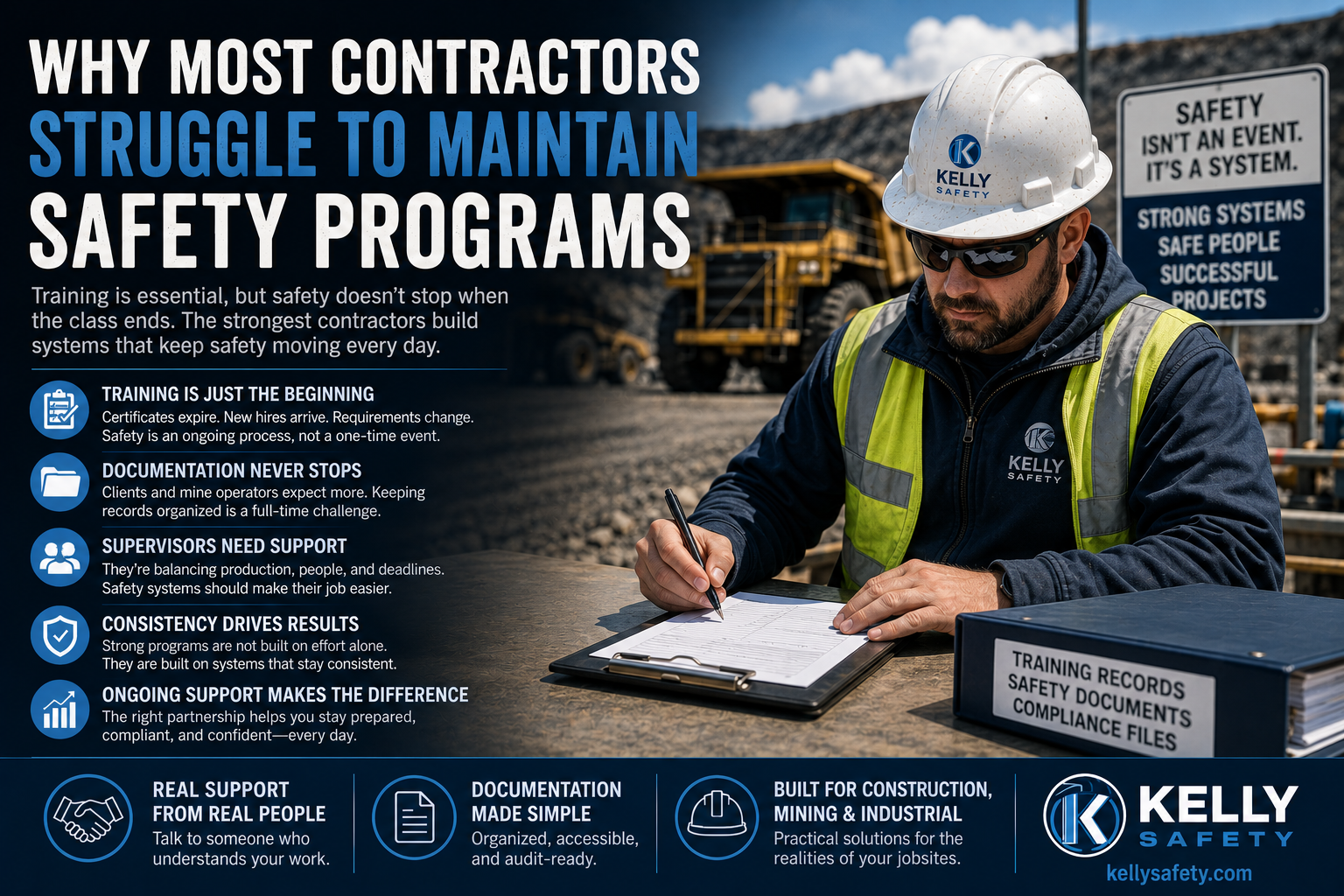
Most contractors don't have a training problem. They have a consistency problem. Training may be completed, but documentation, onboarding, refresher deadlines, client requests, and compliance requirements continue long after the certificates are filed away. The strongest safety programs are not built around one-time events. They are built around systems that support safety every day, long after the training is over.
8–9 Minute Read
Growth creates problems most contractors never expected
When most contractors start a business, safety is relatively straightforward.
The owner knows every employee by name. Training records are easy to track. Documentation lives in a folder somewhere in the office. When a client requests information, it can usually be found within a few minutes.
Then the company starts growing.
More employees are hired. More projects are awarded. Crews begin working in multiple locations. Clients start requesting additional documentation. Training requirements increase. Qualification packets become more detailed. New employees require onboarding. Annual refresher training starts coming due. Suddenly, safety becomes more than training. It becomes a system that needs constant attention. This is the point where many contractors discover the safety problem they never anticipated.
Most contractors don't struggle with safety knowledge
One of the biggest misconceptions in the industry is that companies struggle because they do not understand safety. In most cases, that is not true. The majority of contractors understand the importance of training. They know documentation matters. They understand compliance requirements. They want employees to go home safe at the end of the day.
The challenge is not knowledge. The challenge is capacity.
Owners are focused on serving customers, managing projects, estimating work, hiring employees, solving operational problems, and growing the business. Supervisors are balancing manpower, production schedules, equipment issues, and client expectations.
Somewhere in the middle of all that, safety documentation, training records, onboarding requirements, qualification requests, and compliance tracking continue piling up. The work never stops.
Safety becomes harder to manage as businesses grow
Many safety programs work well when a company is small because there are fewer moving parts.
As growth occurs, complexity increases.
Training records become harder to maintain. New employees enter the workforce more frequently. Clients request additional documentation. Mine operators ask for training plans. Contractor qualification requirements become more detailed. Annual training deadlines begin stacking up across multiple crews. None of these tasks are individually overwhelming. Together, however, they create an administrative workload that many growing contractors were never designed to manage internally.
This is often where safety starts becoming reactive instead of proactive. Not because the company stopped caring. Because the demands of growth outpaced the systems supporting it.
Clients are expecting more than ever before
Across construction, mining, and industrial operations, contractor expectations continue to rise.
Clients are no longer looking solely at experience, pricing, and project schedules. They want confidence that contractors have systems in place to manage risk, maintain documentation, train employees, and support compliance requirements. Training records, written programs, onboarding procedures, qualification packets, insurance certificates, and supporting documentation have become part of doing business.
Many contractors are surprised by how much information clients now request before work even begins.
The reality is simple.
Contractor qualification has become part of modern risk management. The companies that can quickly produce organized documentation create confidence. The companies that cannot often find themselves scrambling to catch up.
Most growing contractors aren't ready for a full-time safety department
This creates a challenge that many business owners eventually face. Safety has become too important to ignore, but the company may not be large enough to justify hiring a full-time safety professional.
That leaves owners in a difficult position.
They can attempt to manage everything internally, often adding responsibilities to already overloaded supervisors and office staff. Or they can search for practical ways to maintain safety systems without dramatically increasing overhead. This is where many growing contractors begin looking for outside support. Not because they want less involvement in safety. Because they need help maintaining consistency as the business grows.
The strongest contractors build support systems
When you look at successful contractors, a pattern begins to emerge.
They understand they cannot personally manage every aspect of the business forever. Eventually they outsource payroll. They outsource accounting. They work with insurance professionals. They partner with specialists in areas where additional expertise creates value.
Safety is no different.
Strong contractors recognize that maintaining training records, supporting documentation, onboarding processes, qualification requirements, and compliance systems requires time and attention throughout the year. Instead of waiting until audits, client requests, or training deadlines create problems, they build systems designed to keep everything moving consistently. That consistency becomes a competitive advantage.
Why more contractors are turning to ongoing safety support
This is one reason membership-based safety support continues gaining traction among contractors. Training remains important, but training alone does not manage documentation. It does not organize records. It does not support supervisors. It does not respond to client requests. It does not maintain consistency between refresher courses.
Membership support helps fill that gap.
Instead of treating safety as a once-a-year event, contractors gain access to ongoing resources, guidance, documentation support, training management assistance, and practical tools designed to support daily operations. The goal is not replacing internal ownership of safety.
The goal is making safety easier to sustain.
Safety works best when it becomes a partnership
At Kelly Safety, we've seen the same pattern repeatedly. Contractors understand safety. They understand training. They understand what needs to be done. What they often need is support maintaining those systems while continuing to grow the business.
When documentation requests arrive, there is someone to call. When training requirements change, there is guidance available. When onboarding systems need improvement, there are resources already in place. Safety becomes less reactive because contractors are no longer trying to manage every requirement alone.
That support allows owners and supervisors to focus more attention on operations while maintaining confidence that safety is still moving forward.
A Final Thought From the Field
Most contractors do not struggle because they lack commitment to safety.
They struggle because growth creates responsibilities that eventually exceed available time and resources. Training remains essential. Documentation remains important. Compliance requirements continue growing. Client expectations continue increasing. The strongest contractors recognize this reality early. They build systems, processes, and partnerships that allow safety to scale alongside the business. Because at some point, every growing contractor faces the same question:
How do we maintain a strong safety program without losing focus on the work that built the company in the first place?
The companies that answer that question well are often the ones that continue growing with confidence.