
MSHA Training: Part 46 vs. Part 48 Explained
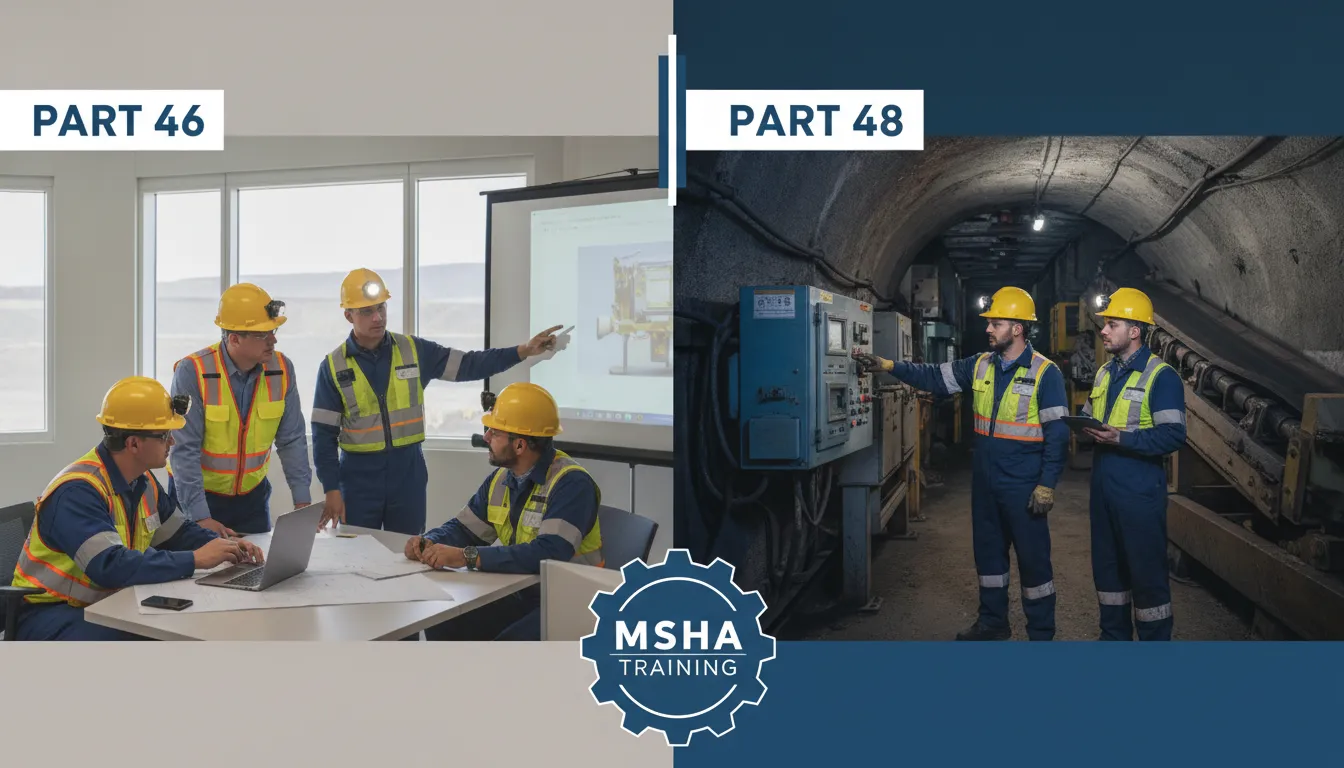
A mine-site assignment can start before a worker reaches the gate. Contractors may need to show they have completed the right safety instruction, and a course that worked at one operation may not cover another. That’s because msha training depends on the mine, the worker’s experience, and the tasks they’ll perform. Part 46 and Part 48 have different requirements, while site-specific instruction remains important. If you’re preparing for a new job or organizing a crew, it helps to know what to confirm before anyone enrolls. This guide explains who may need training, how online courses fit, and what to ask the mine operator.
Key Takeaways
- Check your training requirements first: Ask the mine operator whether Part 46 or Part 48 applies and which courses fit your duties and experience.
- Pair online coursework with mine-specific instruction: Confirm what the course covers, then ask the operator about any site or task training you need.
- Keep your records current: Save course certificates, confirm how the operator will document your training, and track your annual refresher deadline.
What Is MSHA Training, and Who Needs It?
How training supports mine safety and compliance
MSHA training helps workers recognize mine-site hazards, follow safe work practices, and understand how to respond to emergencies. Depending on the mine and the work, instruction may cover protective equipment, communication procedures, site conditions, and job-specific risks.
Training also helps mine operators meet federal requirements and prepare workers for the conditions they may encounter. A general safety course can provide useful background, but it may not address the hazards or procedures at a particular mine. That is why training plans and site-specific instruction matter. The Mine Safety and Health Administration’s training resources explain how training supports its work to protect miners’ health and safety.
When miners, contractors, and other workers need training
MSHA training may apply to more than a mine’s direct employees. Contractors who perform work at a mine, such as equipment repair, construction, or maintenance, may need training based on their duties and the operation. Workers who enter a site for a limited purpose may need hazard awareness instruction, while workers doing mine-related tasks may have additional requirements.
The specific rules depend on the operation and the worker’s role, so don’t assume that a general safety card or an employer’s standard orientation is enough. Before arriving, ask the mine operator what training you need and whether you must complete instruction at the site. MSHA provides training guidance for mine operators and workers to help clarify requirements.
How the mine, job duties, and site access shape training needs
The training that applies to you depends on factors such as whether the mine is surface or underground, the type of operation, the tasks you’ll perform, and the areas you’ll enter. A contractor repairing equipment at a surface mine may need different instruction from a worker assigned to an underground operation. A change in duties can also bring new hazards and training needs.
Before enrolling in a course, share your job duties, mining experience, and expected site access with the mine operator. Ask which training rules apply and whether site-specific instruction is required. A course title alone may not tell you whether the training meets your assignment’s requirements. You can review Kelly Safety’s online MSHA training options, then confirm the right course and any additional instruction with the operator.
Part 46 or Part 48: Which Rules Apply?
The type of mine is the main factor in deciding whether Part 46 or Part 48 applies. Your job duties, experience, and the mine’s training plan also shape what instruction you need. The requirements differ, so completing a general MSHA course does not automatically mean you have met every site requirement. Ask the mine operator which part applies and what training you must complete before starting work.
Part 46: Surface nonmetal mines and other covered operations
Part 46 generally covers surface nonmetal mines, including many operations in the aggregate industry, such as sand, gravel, granite, lime, and cement mines. New miners need at least 24 hours of training, and miners covered by Part 46 must complete at least eight hours of annual refresher training.
The mine operator must have a training plan that meets MSHA requirements, but Part 46 plans do not need prior MSHA approval. Trainers must be competent to teach the subjects in the plan. The operator may also need to provide instruction specific to the mine and your duties. Review MSHA’s training guidance, then ask the operator how an online course fits into its training plan.
Part 48: Underground mines and certain surface operations
Part 48 applies to all underground mines and certain surface operations, including surface coal mines and some metal mines. New-miner training requirements vary by mine type and can range from 24 to 40 hours. Miners must also complete at least eight hours of annual refresher training.
Part 48 trainers must be approved by MSHA. Online training may cover part of your required instruction, but it does not replace any site- or task-specific training the mine operator must provide. Before enrolling, confirm that the course applies to your mine and ask what instruction you will complete on site. You can also review Kelly Safety’s online MSHA training options and share the course details with the operator.
Compare training plans, instructor qualifications, and records
Both parts require mine operators to maintain a training plan and ensure miners receive required instruction. One important difference is trainer approval: Part 48 trainers must be approved by MSHA, while Part 46 trainers must be competent but do not need MSHA approval.
Recordkeeping requirements differ, too. Part 48 training is documented on MSHA Form 5000-23 or an acceptable alternative. Part 46 records must include information required by the regulation, but operators do not have to use Form 5000-23. The operator is responsible for keeping the required records, so ask what proof of completed training it needs from you. MSHA’s training page provides guidance on requirements for both parts.
Ask the mine operator which part applies before enrolling
Don’t choose a course based on the job title alone. The applicable training depends on the mine, your experience, the work you will perform, and the operator’s training plan. Before enrolling, ask whether Part 46 or Part 48 applies, which training you need before arriving, and whether the course you’re considering meets the mine’s requirements.
Also ask what instruction the operator will provide, including site-specific hazard information and training for the tasks you’ll perform. A course provider can explain its curriculum and issue a certificate, but the operator must ensure you receive all required training and maintain the appropriate records. If you’re a contractor, confirm these details with both your employer and the mine operator before your first shift.
What Initial and Annual Training Do You Need?
The training you need depends on whether Part 46 or Part 48 applies, your mining experience, and the work you’ll perform. Both parts require initial training for miners and at least eight hours of annual refresher training. They also require instruction that addresses mine conditions and the hazards of assigned tasks.
Before enrolling, ask the mine operator which part applies and what training the site requires. This is especially important for contractors, since a general course may not cover the mine’s emergency procedures, local hazards, or equipment. The operator is responsible for determining whether your training meets the mine’s plan and for arranging any site-specific instruction.
Keep records of courses you have completed and share them with the operator. A certificate can help document your training, but it does not automatically replace instruction required by the mine’s plan. Kelly Safety offers online MSHA training courses; confirm with the mine operator that a course fits your requirements before you enroll.
Part 46: new miner, experienced miner, and refresher training
Under Part 46, new miners generally need at least 24 hours of training. Some required instruction must be completed before work begins, with the rest provided within the timeframes set by the rule and the mine’s training plan. The training should prepare workers to recognize hazards and follow safe procedures at the mine.
Experienced miners may have different requirements based on their work history and the mine’s plan. They still need instruction on relevant mine hazards, emergency procedures, and safety requirements. Part 46 also requires at least eight hours of refresher training at least once every 12 months. Because details can depend on the miner’s experience and job, check the Part 46 regulation and confirm your training schedule with the operator.
Part 48: initial training for surface and underground miners
Part 48 covers underground mines and certain surface operations. New underground miners generally need 40 hours of initial training; new miners at covered surface operations generally need 24 hours. Requirements can vary based on the mine and a worker’s experience, so ask the mine operator which training plan applies before choosing a course.
Part 48 training plans and instructors must meet MSHA requirements. The operator can explain which approved plan governs your training and how your course fits into it. For more detail, review MSHA’s training information, then verify the specific requirements with the mine. This check matters for contractors working at multiple sites, since one mine’s plan or site instruction may not cover the conditions at another.
Complete at least eight hours of annual refresher training under both parts
Both Part 46 and Part 48 require miners to complete at least eight hours of refresher training annually. Refresher instruction reinforces essential safety practices and can address changes in mine conditions, equipment, procedures, or hazards. The topics should reflect the applicable training plan and the work miners perform.
Track when you completed your last refresher course, and confirm your next deadline with your employer or mine operator. Do not assume that a course completed for another site automatically satisfies the current mine’s requirements. The operator must ensure the training meets the applicable rule and is documented as required. You can consult MSHA’s training guidance for general information, but the mine’s plan is the best source for site-specific details.
Complete new-task training before unfamiliar work
If you’re assigned a task you haven’t performed before, you need instruction on its hazards and safe work procedures. General miner training may not cover the risks of specific equipment, work areas, or duties. For example, operating unfamiliar machinery can involve hazards that weren’t part of your previous training.
Ask your supervisor or mine operator what instruction is required before you begin the task. Training should match the work and the conditions at the site, and the operator can explain who will provide it. A certificate from a previous job does not necessarily cover new duties or local procedures. The Part 46 rule describes training requirements for miners assigned new tasks; operators should also follow the applicable Part 48 requirements when that rule governs the mine.
See how prior mining experience affects requirements
Prior mining experience can affect which initial training requirements apply, but it does not automatically remove the need for training. The operator may need to consider your experience, how recently you worked as a miner, the type of mine, and your new duties. Even experienced workers may need instruction on site-specific hazards, emergency procedures, and equipment.
Share your work history and training records with the mine operator before starting. The operator can determine whether your experience qualifies under the applicable rule and identify any additional training you need. If you’ve worked at a different type of mine or have been away from mining, ask for clarification before enrolling. This helps ensure you take the right course and receive the site-specific instruction needed for your job.
What Must Mine Operators Provide and Document?
Mine operators do more than arrange a general safety course. They must make sure training meets the requirements for their mine, the worker’s duties, and the applicable MSHA training plan. They also need to keep accurate records. Online courses can support this process, but the operator remains responsible for confirming what each worker needs.
Provide site- and task-specific hazard instruction
Every mine has hazards shaped by its location, equipment, and work practices. Operators must provide instruction about the hazards workers may encounter at the site, along with training for the tasks they perform. That may include site traffic, emergency procedures, ground conditions, or equipment used in a work area.
Workers may also need task training before taking on unfamiliar duties or when changes affect how a task is performed safely. Operators should identify these needs before work begins and document the training as required. The Part 46 rule explains training requirements for covered mines, including hazard awareness and task training.
Follow the mine’s approved or submitted training plan
The operator must follow the training plan that applies to the mine. Under Part 46, the operator develops and maintains a plan that meets the rule’s requirements. Under Part 48, MSHA must approve the mine’s training plan, and instructors must meet applicable qualifications. MSHA’s safety and training resources explain these requirements.
Before enrolling in a course, ask the mine operator which part applies and what training is required for your role. Requirements can vary by mine classification, job duties, and prior experience. A training provider can describe its course, but the operator must confirm that it fits the mine’s plan and the worker’s needs.
Keep required records: Part 46 documentation and Part 48 Form 5000-23
Operators must keep records showing what training each worker completed and when. Part 46 records must include the information specified by MSHA and remain available for review. Operators can use MSHA Form 5000-23 or an acceptable alternative to document Part 46 training.
Part 48 training is recorded on MSHA Form 5000-23. Workers should keep their course certificates and give copies to the operator, then confirm that the mine has recorded their training in its required records. A certificate is helpful, but it does not transfer responsibility for recordkeeping from the operator. The Part 48 rule outlines the applicable training and documentation requirements.
Know why a course certificate may not fulfill the operator’s records
A course certificate shows that a learner completed a particular course. It may not document site-specific instruction, task training, or other details the operator must record under the mine’s plan. A certificate alone may therefore be insufficient to meet the operator’s training and recordkeeping responsibilities.
Before starting a course, ask the operator what documentation it accepts and whether additional instruction will take place at the mine. Kelly Safety’s online MSHA courses can support a mine’s training program, but the operator should confirm that the course covers the required topics and complete any additional records.
Correct myths about permanent certification and online-only training
MSHA training is not a permanent credential that covers every mine, job, or future assignment. Miners generally need annual refresher training, and a new or changed task may require additional instruction. Ask the operator what training is due for your role before reporting to the site.
It is also inaccurate to assume that everyone entering a mine has the same certification requirement. Requirements depend on the person’s work and the applicable training plan. Contractors and vendors may need training before performing work, while other visitors may have different site-entry requirements. Online courses can cover required topics, but they do not automatically address hazards at a specific mine or replace instruction the operator must provide. Kelly Safety also offers Spanish-language training for learners who prefer to study in Spanish.
Can You Complete MSHA Training Online?
Use self-paced courses for contractors and distributed crews
Yes. Self-paced online courses can help contractors and distributed crews complete MSHA training without traveling to a classroom. Learners can study on a computer or mobile device and fit lessons around work schedules. That flexibility is useful when workers are spread across locations or need to complete training before reporting to a mine. Many providers also make course materials available soon after enrollment.
Online training still needs to match the requirements for your mine and job. Ask the mine operator which training you need before enrolling, and confirm that the course fits the mine’s training plan. Kelly Safety offers online MSHA courses, including new miner training and annual refreshers, for contractors nationwide.
Know what online training covers and what the mine must address on site
An online course can explain mining hazards, safe work practices, and other required topics. It can help you prepare to recognize risks before arriving at a mine, but a general course may not cover the specific equipment, conditions, or emergency procedures at your worksite.
The mine operator must address site-specific information and any practical instruction required for your assignment. Depending on your work, that may include reviewing local hazards or demonstrating how to use equipment safely. Online training is one part of preparation, not a replacement for required instruction at the mine. Ask your supervisor what you need to complete before starting work. MSHA’s training guidance can also help you understand the agency’s requirements.
Confirm course eligibility, content, and acceptance with the mine operator
Before choosing a course, ask whether Part 46 or Part 48 applies to your mine and assignment. The correct training depends on the mine and the work you will perform, not just your job title. Confirm which topics you need, whether the course meets the mine’s training plan, and whether the operator accepts the provider and online format.
Ask what documentation the mine requires, too. A course certificate can show that you completed online training, but it may not replace the operator’s required records or site-specific instruction. Checking before you enroll can prevent delays and help you avoid repeating training. If you are unsure which course fits, share your job duties and worksite details with the operator or training provider, then get confirmation before you begin.
Choose flexible access, online certificates, and Spanish-language options
When comparing providers, check which topics each course covers, how learners access the material, and what documentation they receive upon completion. Self-paced access can make it easier to complete training around shifts and job assignments. An online certificate gives you a record to share with your employer, but ask whether the mine also needs specific forms or additional documentation.
Language access matters because workers need to understand the material to use it safely. Kelly Safety provides Spanish-language training alongside its MSHA courses. Ask your employer whether the course is appropriate for your assignment and whether site-specific instruction will be available in a language you understand. Confirming these details in advance helps you arrive prepared and complete the right training for the mine.
How to Choose an MSHA Training Provider
Compare course scope, delivery, learner support, and feedback
Start by confirming that a course fits the worker’s role and the mine’s training plan. MSHA training teaches workers how to work safely, but a general course may not cover every hazard, task, or site procedure they’ll encounter. Ask the provider what the course includes and what instruction the mine operator must supply.
Then check how learners access the material, whether they can work at their own pace, and how they can get help. Recent reviews may offer useful details about course clarity, technical support, and ease of use. Compare the provider’s course information with the operator’s requirements before enrolling. This step can help you spot gaps early and avoid assuming that one online course covers every part of a worker’s training.
Check pricing, group options, and included services
Compare the total cost, not only the listed course fee. Ask whether the price includes a certificate, learner support, a set period of course access, or tools for managing group enrollment. Employers training several contractors should also ask about group rates, progress tracking, and how the provider shares completion information.
Course packages and prices can change, so request a current quote and confirm which course each worker needs. A Part 46 course listing can give you a starting point for comparing course details and included services. Before purchasing, check the final cost with the provider and verify the course fits the mine’s requirements with the operator. Clear answers make it easier to plan training time and budget for any site instruction that’s also required.
Consider Kelly Safety’s contractor-focused online MSHA courses
Contractors may need training that fits changing schedules and supports crews working at different locations. Kelly Safety offers self-paced online MSHA courses for contractors, including new miner training and annual refreshers. Learners can complete coursework remotely and access certificates online, making it easier to coordinate training across a distributed team.
Before enrolling, confirm that the specific course matches the worker’s experience, duties, and the mine’s training plan. Review Kelly Safety’s MSHA course options, then ask the mine operator whether additional instruction is needed. Kelly Safety also offers Spanish-language training, which can help employers provide course access to workers who prefer to learn in Spanish. As with any provider, check how course completion will be documented and what records the operator needs.
Coordinate site instruction and training records with the mine operator
A course certificate can show that a learner completed coursework, but it may not satisfy every part of the mine’s training plan. The mine operator may need to cover site-specific hazards, tasks, and procedures. Before training begins, ask who will provide this instruction, when workers must complete it, and how it fits alongside the online course.
Also confirm what documentation the operator needs. Recordkeeping requirements vary between Part 46 and Part 48, so don’t assume a provider’s certificate replaces the mine’s required records. Discuss how the provider will share completion details and who will maintain the official training documentation. You can review MSHA training course guidance, then coordinate directly with the operator to confirm that coursework, site instruction, and records are all handled as required.
Frequently Asked Questions
How do I know whether Part 46 or Part 48 applies to my job?
It depends mainly on the type of mine and its training plan. Ask the mine operator which rule covers your assignment before choosing a course, and share your duties and mining experience.
Does an online MSHA course qualify me to work at any mine?
Not by itself. A course may cover required topics, but each mine may also require site-specific or task-specific instruction. Confirm with the operator that the course fits your assignment and ask what else you need to complete.
How often do miners need refresher training?
Part 46 and Part 48 generally require at least eight hours of refresher training each year. Check with your employer or mine operator to confirm your deadline and the topics required by the applicable training plan.
Will my course certificate meet the mine’s recordkeeping requirements?
A certificate can document course completion, but the operator may need additional information or records. Give the operator your certificate and ask how the training will be recorded under the mine’s plan.
Can contractors complete MSHA training in Spanish?
Yes. Kelly Safety offers Spanish-language training. Contractors should still confirm with the mine operator that the selected course and any additional site instruction meet the requirements for their work.