
NFPA 70E: Why Electrical Safety Requires More Than Just PPE
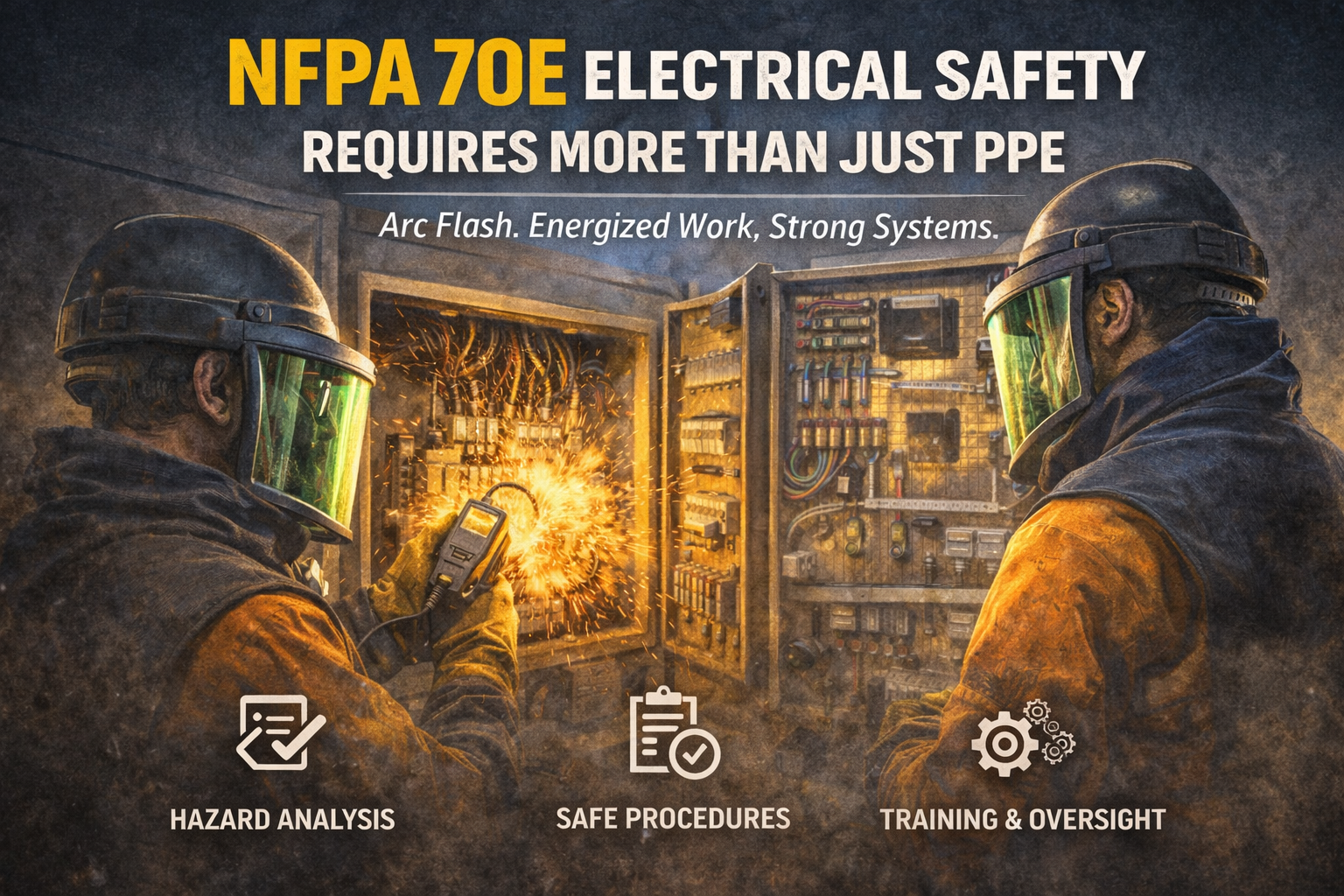
Read Time: 7–8 minutes
NFPA 70E protects workers from electrical hazards like arc flash and shock. Learn why compliance requires planning, training, and strong safety systems.
Electrical work is one of those hazards people tend to underestimate, until something goes wrong. I’ve walked into facilities where energized equipment was treated as routine, lockout procedures were loosely followed, and arc flash protection was an afterthought. Everyone “knew the risks,” but very few were actively managing them.
That’s exactly why NFPA 70E exists. It wasn’t written to make electrical work harder, it was written because shock, arc flash, and arc blast injuries were permanently changing lives. As President of Kelly Safety, I’ve seen how quickly electrical incidents escalate and how unforgiving they are when procedures aren’t followed. NFPA 70E is about preventing those moments before they happen.
What NFPA 70E Is Really Designed to Do
NFPA 70E is the standard for electrical safety in the workplace. Its primary goal is simple: protect workers from electrical hazards. That includes shock, electrocution, arc flash, and arc blast hazards that don’t leave room for mistakes.
The standard establishes requirements for safe work practices, hazard analysis, energized work permits, PPE selection, and training. While OSHA enforces electrical safety through regulations, it frequently references NFPA 70E as a recognized industry consensus standard.
https://www.osha.gov/laws-regs/standardinterpretations/2007-10-18
In other words, NFPA 70E is how companies demonstrate they are following best practices for electrical safety not just minimum requirements.
Why Electrical Hazards Are Different From Other Risks
Electrical hazards are deceptive. You can’t always see them, hear them, or smell them. Equipment can look “off” and still be energized. Panels can appear normal until an arc flash releases temperatures hotter than the surface of the sun.
NIOSH has long identified electrical hazards as a leading cause of serious workplace injuries and fatalities, especially in construction, maintenance, and industrial environments.
https://www.cdc.gov/niosh/topics/electrical
Unlike many hazards, electrical incidents often result in catastrophic injury in a single moment. There’s rarely a second chance.
Arc Flash Is the Hazard Most People Miss
When people think about electrical safety, they usually think about shock. Arc flash is often overlooked and it shouldn’t be.
An arc flash can produce intense heat, pressure waves, and molten metal in fractions of a second. NFPA 70E requires arc flash risk assessments specifically because relying on “experience” isn’t enough.
The National Fire Protection Association makes it clear that arc flash hazards must be identified, labeled, and controlled before work begins.
https://www.nfpa.org/70E
When arc flash hazards aren’t assessed properly, PPE becomes guesswork and guesswork is dangerous.
Why PPE Alone Is Not Compliance
One of the biggest misconceptions I see is the belief that wearing arc-rated clothing equals compliance. PPE is important, but NFPA 70E is very clear: PPE is the last line of defense, not the first.
The standard prioritizes:
Hazard elimination
De-energizing equipment
Engineering controls
Administrative controls
PPE as a final safeguard
OSHA reinforces this hierarchy of controls across all hazard types, including electrical work.
https://www.osha.gov/safety-management/hazard-prevention
If energized work is routine instead of exceptional, something in the system is broken.
Training Is Where NFPA 70E Lives or Dies
NFPA 70E requires that workers exposed to electrical hazards be trained to understand the risks and the procedures needed to control them. But training that happens once and never gets reinforced fades quickly—especially in environments where electrical work isn’t performed every day.
Workers need to understand:
When equipment is considered energized
How to recognize arc flash hazards
When energized work is justified
How to select appropriate PPE
How to follow lockout/tagout procedures correctly
OSHA continues to stress that training must be ongoing and aligned with job tasks not generic or outdated.
https://www.osha.gov/training
This is why many contractors rely on ongoing training access rather than one-time courses. A structured training subscription helps ensure electrical safety knowledge stays current as crews, equipment, and job conditions change.
https://www.kellysafety.com/subscription
Where Electrical Safety Programs Break Down
Most failures aren’t intentional. They happen when:
Energized work becomes normalized
Lockout/tagout shortcuts creep in
Supervisors assume “qualified” means “invincible”
Documentation isn’t reviewed or updated
Near misses aren’t discussed
Electrical safety requires discipline. When systems aren’t in place to reinforce that discipline, people rely on memory and memory fails under pressure.
NFPA 70E Is a Leadership Responsibility
Electrical safety isn’t owned by electricians alone. Leadership sets the tone for whether energized work is questioned or accepted, whether procedures are followed or bypassed.
The strongest electrical safety programs I’ve seen have one thing in common: leadership involvement. Supervisors understand the standard. Management supports de-energizing work even when it slows production. Workers feel empowered to stop unsafe electrical tasks.
That culture doesn’t happen by accident.
Conclusion: Electrical Safety Demands Respect and Structure
NFPA 70E exists because electrical hazards are unforgiving. Shock, arc flash, and arc blast injuries don’t come with warnings and they don’t offer second chances.
Compliance isn’t about PPE alone. It’s about systems, training, leadership, and the willingness to slow down when the risk is high. When NFPA 70E is treated seriously, workers are protected, incidents are reduced, and companies demonstrate true commitment to safety.
If your teams work around energized equipment, don’t rely on luck or experience alone. Build a safety system that supports electrical work the right way; every time.
That’s how careers are protected. And that’s the standard we help contractors maintain at Kelly Safety.