
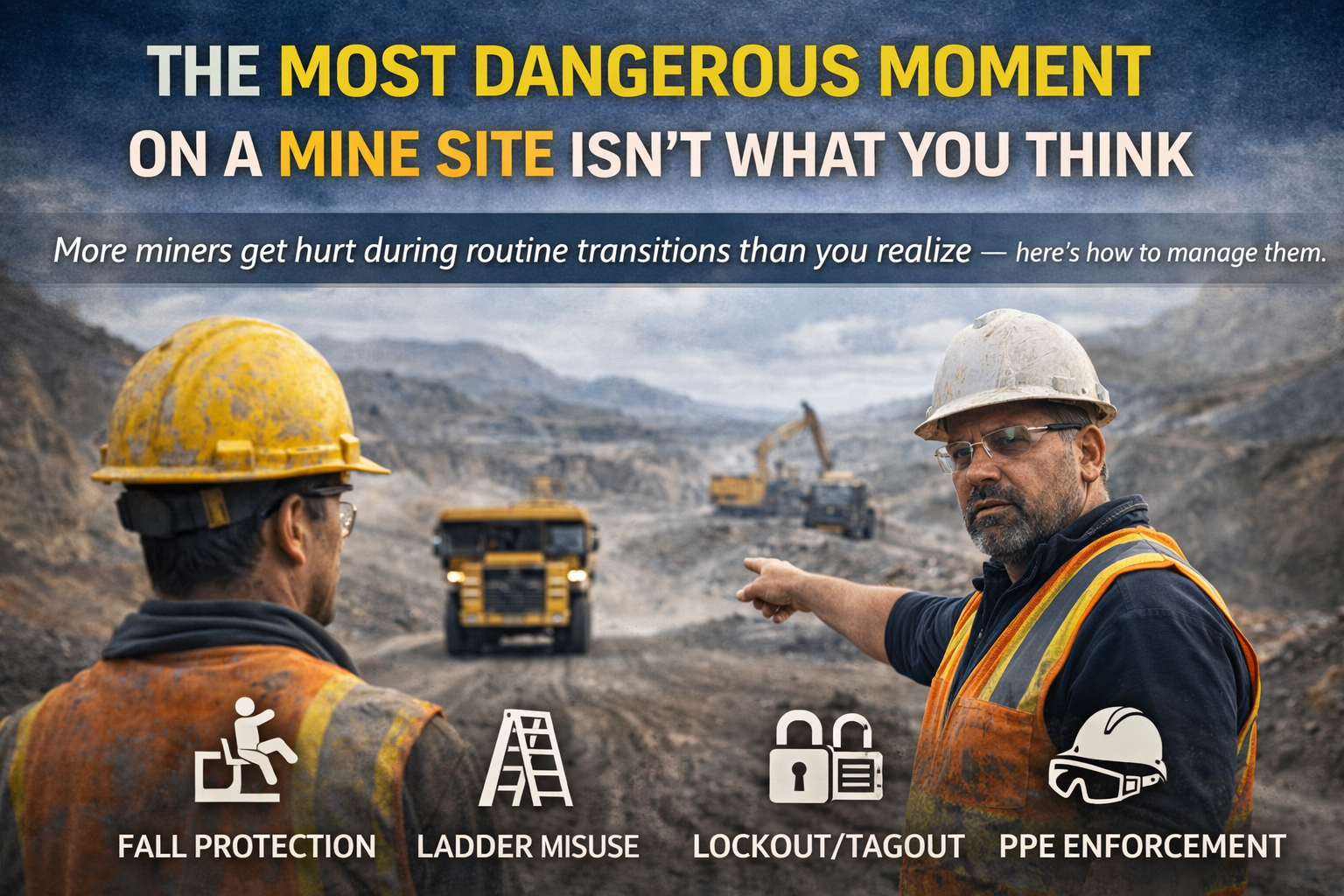
The Most Dangerous Moment on a Mine Site Isn’t What You Think
8–9 Minute Read
The most dangerous moment on a mine site isn’t blasting or heavy equipment; it’s during routine transitions. Learn how communication gaps and assumptions lead to incidents and how to prevent them.
It’s Not the Blast. It’s Not the Equipment.
When people think about mining hazards, their mind goes straight to the obvious. Blasting operations, massive haul trucks, highwalls, and heavy production equipment all come to the surface. And those risks are real. They’re controlled, planned, and respected because everyone understands the consequences tied to them.
But after spending enough time around mine sites and watching how work actually unfolds, you start to see a different pattern. The biggest risks aren’t always tied to the biggest operations. They’re tied to the moments that don’t feel dangerous at all. The moments where nothing major is happening or at least, it seems that way.
The Real Risk Lives in the Transitions
The most dangerous time on a mine site is during transitions. Not during full production, not during blasting, but in the moments between one task and the next. When shifts are changing, when crews are moving locations, or when the job is switching from production to maintenance, structure starts to loosen.
The job isn’t fully stopped, but it’s not fully set up either. Responsibilities blur. Communication gets lighter. People begin operating off assumptions instead of clear direction. And that’s where exposure quietly increases. Not because anyone is doing something reckless, but because the system itself becomes less defined.
Assumptions Replace Communication Faster Than You Think
Mining depends on coordination. Equipment operators, ground crews, supervisors, and contractors all rely on communication to stay aligned. During active operations, that communication is usually sharp and intentional. Everyone knows what’s happening and where they need to be.
But during transitions, things change. Someone assumes a piece of equipment is shut down. Another crew believes an area is clear. A contractor steps into a zone thinking work has paused. Nobody is trying to make a mistake, but when communication drops off, assumptions take over. And in mining, assumptions are one of the most dangerous things you can rely on.
Contractors Feel the Gap the Most
Contractors working on mine sites often operate at a disadvantage during these moments. They’re stepping into an environment that’s already moving, already structured, and already familiar to the people who work there every day. But they don’t always have the same level of visibility.
They may not be fully integrated into communication systems. They may not understand informal routines that crews rely on. They may not recognize subtle shifts in activity that signal a change in conditions. During transitions, when clarity is already reduced, that gap becomes even more dangerous. Because when things aren’t clearly defined, contractors are often left filling in the blanks themselves.
The Equipment Never Really Stops
One of the biggest misconceptions on a mine site is that risk drops during slower moments. In reality, the opposite is often true. Equipment doesn’t just stop because the task is changing. Haul trucks are still moving. Loaders are repositioning. Support equipment is active in the background.
At the same time, you now have workers moving on foot, preparing for new tasks, or entering areas they weren’t in before. That overlap between movement and uncertainty creates a different kind of hazard one that isn’t always obvious until something goes wrong. It’s not the scale of the operation that creates the risk. It’s the lack of alignment.
Routine Is What Makes It Dangerous
Transitions happen constantly. Multiple times a shift, every single day. And because they’re routine, they don’t always get treated like high-risk moments. There’s no major event tied to them. No loud signal that something has changed. No pause that forces people to reset.
That familiarity creates complacency. When something happens often without incident, it starts to feel safe. But the risk doesn’t disappear. It just becomes less visible. And when risk becomes invisible, it’s much easier for people to walk straight into it.
Strong Operations Don’t Leave It to Chance
The best-run mine sites don’t treat transitions as background activity. They build structure into them. They make communication intentional, not assumed. They define access zones clearly, especially for contractors. They make sure handoffs between crews aren’t rushed or vague.
There’s an understanding that these moments deserve the same level of attention as major operations. Because they recognize something most people overlook, unstructured time is where incidents begin to take shape.
Leadership Shows Up in the Quiet Moments
It’s easy to enforce safety when the risk is obvious. When everyone knows the job is dangerous, people naturally pay attention. But real leadership shows up during the moments that don’t feel critical.
It’s in the pause before movement. It’s in the extra question instead of an assumption. It’s in making sure everyone especially the people who aren’t there every day, understands what’s happening next. That consistency is what separates sites that react to incidents from sites that prevent them.
A Final Thought From the Field
The most dangerous moment on a mine site isn’t loud. It doesn’t come with alarms or warnings. It’s quiet. It’s the moment between tasks, between shifts, between one plan and the next.
It’s when people believe things are under control without actually confirming it.
And in mining, that’s all it takes.
The safest operations aren’t just the ones that manage the big risks. They’re the ones that stay disciplined in the moments where risk is easiest to overlook.