
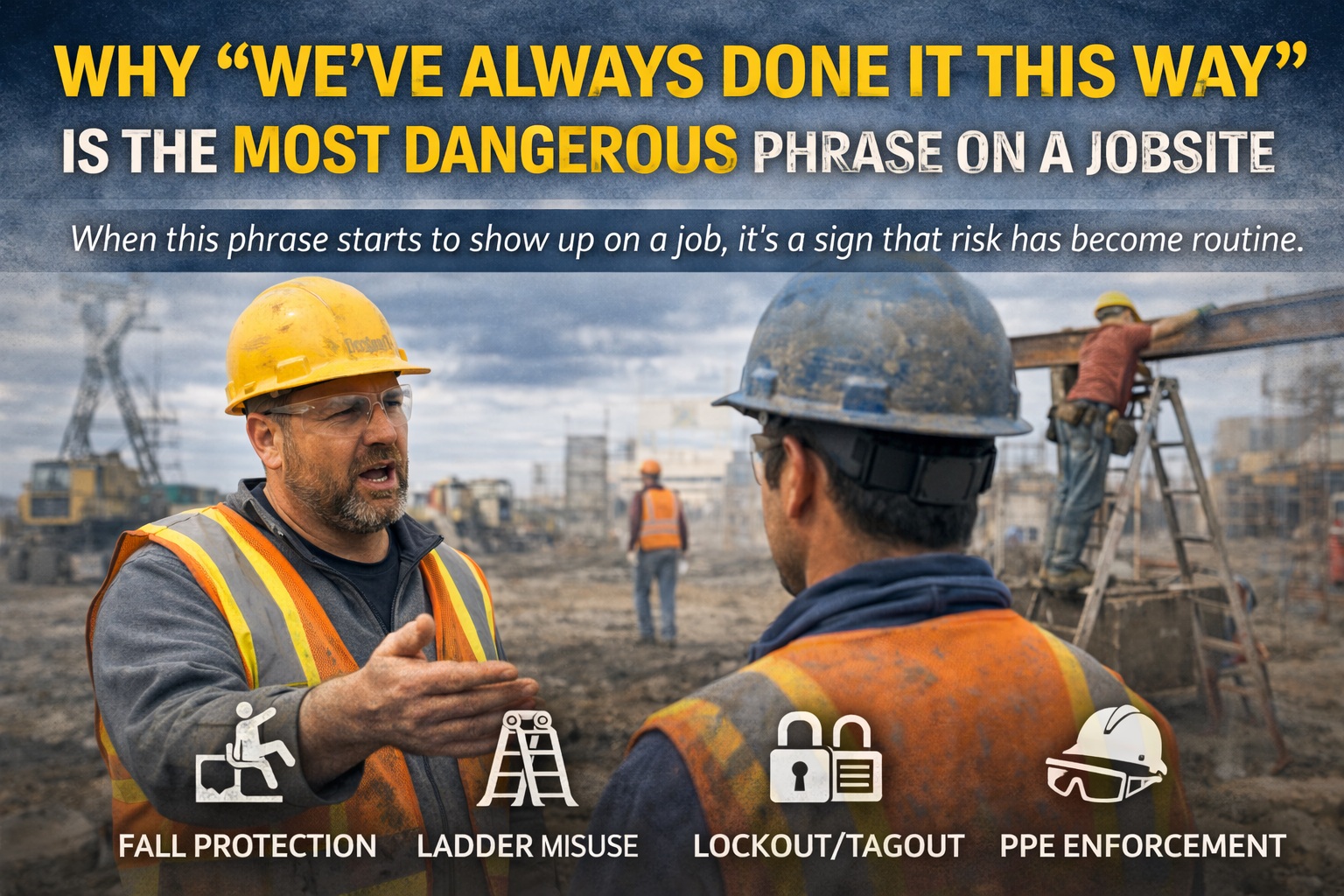
Why “We’ve Always Done It This Way” Is the Most Dangerous Phrase on a Jobsite
8–9 Minute Read
The phrase “we’ve always done it this way” is behind more safety incidents than most people realize. Here’s why it’s dangerous — and how strong crews avoid it.
The Phrase That Gets People Hurt
Every jobsite has it.
It doesn’t matter if you’re on a construction project, inside a plant during a shutdown, or working a mine site. At some point, someone says:
“We’ve always done it this way.”
Most of the time, it’s not said with bad intent. It’s usually coming from experience. From someone who’s been doing the job for years and hasn’t had a problem. That’s exactly what makes it dangerous. Because the longer something works without consequences, the more it starts to feel like the right way, even when it isn’t.
Experience Can Become a Blind Spot
Experience is one of the most valuable things on a jobsite. But if it’s not checked, it can turn into overconfidence.
A worker who’s done a task a hundred times without an incident starts to trust the outcome instead of the process. They stop thinking about the hazard because nothing bad has happened yet.
That’s how shortcuts get built into routines. Not overnight. Not intentionally. Just slowly, over time. And once that routine is accepted by the crew, it becomes the standard; even if it was never safe to begin with.
Shortcuts Don’t Feel Like Shortcuts
Most unsafe decisions don’t feel reckless in the moment. They feel efficient.
Skipping fall protection because “it’ll only take a second.” Using the wrong tool because it’s closer.
Not locking out equipment because someone believes it’s already off. None of these decisions feel like a big deal when they happen.
That’s the problem. Real safety failures usually come from normalizing small risks, not from one big, obvious mistake.
The Jobsite Doesn’t Care About Your Track Record
One of the hardest things for experienced workers to accept is this: The jobsite doesn’t care how long you’ve been doing the job.
It doesn’t care that you’ve never been hurt before. It doesn’t care that you’ve done it this way for ten years. Hazards don’t recognize experience. They respond to exposure. You can do something wrong a hundred times and walk away fine. That doesn’t make it safe. It just means you got away with it.
How Bad Habits Spread Across Crews
Safety culture isn’t built in meetings. It’s built by what people see every day. When a new worker comes onto a jobsite, they don’t learn from the manual first. They learn from the crew. If they see experienced workers cutting corners, they’ll assume that’s how the job gets done. If they see supervisors ignoring it, they’ll assume it’s acceptable.
That’s how unsafe habits spread; quietly, quickly, and without anyone realizing it. Before long, the entire crew is operating under a system that was never intentionally created.
The Difference Between Professionals and Everyone Else
The best contractors I’ve worked with don’t rely on “how it’s always been done.” They rely on standards. They take the time to set things up correctly, even when it slows the job down. They question routines that don’t make sense. They hold their crews accountable to doing the job the right way, not the easy way. That’s what separates professionals from everyone else.
Not experience alone: but discipline.
Changing the Mindset Without Losing the Crew
One of the biggest challenges in safety is correcting experienced workers without losing their respect. If you approach it the wrong way, it comes across like you’re questioning their ability. If you approach it the right way, it becomes about protecting them.
The conversation isn’t: “You’ve been doing this wrong.”
It’s: “We’re making sure everyone goes home the same way they showed up.” That shift matters. Because most workers don’t resist safety, they resist being talked down to.
What Strong Leadership Looks Like on a Jobsite
Strong safety leadership isn’t about quoting regulations. It’s about setting expectations and backing them up.
It’s correcting issues in real time. It’s not ignoring small things because they’re inconvenient. It’s making it clear that how the job gets done matters just as much as getting it done. When leadership is consistent, crews follow. When leadership looks the other way, crews notice that too.
A Final Thought From the Field
“We’ve always done it this way” sounds harmless. But on a jobsite, it’s often a warning sign.
A sign that something hasn’t been questioned.
A sign that a shortcut has become normal.
A sign that risk has been accepted instead of managed.
The goal isn’t to erase experience. It’s to combine experience with awareness. Because the safest crews aren’t the ones who have done it the longest. They’re the ones who are willing to do it right….every single time.