
Why Every Contractor Working at a Mine Needs an MSHA Part 46 Training Plan
8–9 Minute Read
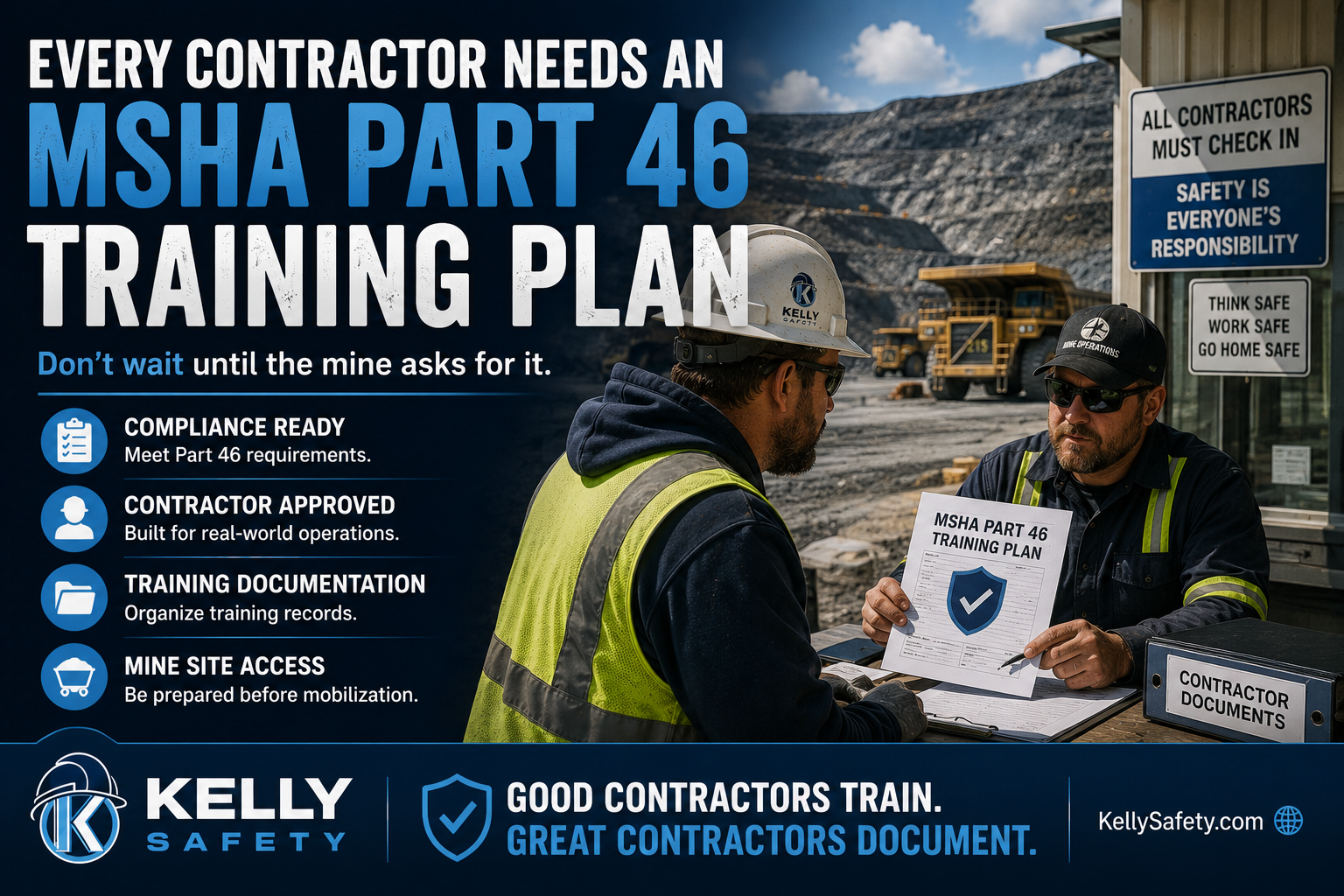
An MSHA Part 46 Training Plan is a critical requirement for contractors working at many surface mines. It outlines how miners will receive required training, identifies competent persons, documents training procedures, and demonstrates compliance to mine operators.
“Many contractors don't realize they need a training plan until someone asks for it”
One of the most common conversations I have with contractors starts the same way. A contractor arrives on a mine site, begins discussing work, and then receives a request from the mine operator.
"Can you send over your MSHA Part 46 Training Plan?"
The problem is many contractors have never created one.
They may have trained employees, maintained records, and operated safely for years, but they never developed the written training plan required under Part 46. As a result, what should be a simple administrative request suddenly becomes a last-minute scramble.
The reality is that every contractor performing work at a Part 46 mine should have a training plan long before they are asked for it.
A training plan is more than a compliance document
Many companies view the training plan as paperwork created solely to satisfy MSHA requirements.
That mindset misses the bigger purpose.
A training plan establishes how workers will receive training, who will provide that training, how records will be maintained, and how site-specific hazards will be communicated. It creates consistency across the organization and provides mine operators with confidence that contractors understand their responsibilities before arriving on site. More importantly, it helps ensure workers receive the information necessary to recognize hazards and work safely in mining environments.
Mine operators are increasingly requesting contractor documentation
Over the past several years, contractors have seen increased expectations from mine operators regarding documentation and contractor management.
Training records, certificates, insurance information, and written programs are now commonly requested before work begins. Training plans are often part of that process. From the mine operator's perspective, contractor management is not optional. They are responsible for ensuring contractors working on their property meet applicable requirements and understand site-specific hazards.
When a contractor cannot provide a training plan, it immediately raises questions about preparedness and compliance.
Building a training plan is simpler than most contractors think
One reason many companies delay creating a training plan is the assumption that it requires extensive documentation or legal expertise.
In reality, a compliant Part 46 Training Plan follows a straightforward structure.
The plan identifies:
Company information
Competent persons responsible for training
Training subjects
New Miner Training procedures
Newly Hired Experienced Miner Training procedures
Annual Refresher Training procedures
Site-Specific Hazard Awareness Training procedures
Recordkeeping practices
The challenge is not complexity.
The challenge is knowing where to start and ensuring all required components are addressed.
The biggest mistake contractors make is waiting until the last minute
Training plans rarely become a priority until a contractor is asked to provide one. Unfortunately, that is usually the worst possible time to create it.
Trying to build a compliant training plan while preparing for mobilization, onboarding employees, coordinating schedules, and meeting client expectations creates unnecessary pressure. Important details get overlooked, documentation becomes rushed, and opportunities for improvement are missed. The best approach is to develop the plan before it is needed so it can become part of the company's overall safety management system.
A strong training plan demonstrates professionalism
Compliance matters, but there is another benefit that often gets overlooked. A well-developed training plan demonstrates professionalism.
Mine operators, safety departments, and project managers often evaluate contractors based on how prepared they appear before work begins. Companies that can quickly provide organized documentation create confidence. Companies that cannot often find themselves answering additional questions and facing additional scrutiny.
A training plan communicates that training is not an afterthought. It is part of how the company operates.
You don't need to reinvent the wheel
One of the biggest misconceptions about training plans is that every company must create one from scratch.
Most contractors already understand their workforce, training needs, and operational requirements. What they need is a framework that organizes that information into a format that meets Part 46 requirements.
That is exactly why templates and structured systems exist. The goal is not to spend days creating documents. The goal is to develop a training plan that is compliant, professional, and easy to maintain moving forward.
A practical solution for contractors
At Kelly Safety, we've worked with contractors across the country who needed help developing compliant training documentation. The challenge was rarely understanding safety. The challenge was knowing how to organize the information into a usable training plan.
That's why we created the MSHA Part 46 Training Plan Package.
The package includes:
MSHA Part 46 Training Plan Template
Site Hazard Awareness Form
Crew Sign-In Sheet
Training Matrix
Quick Start Guide
Supporting documentation designed specifically for contractors
Instead of starting with a blank page, contractors can begin with a structured framework and customize it to fit their operations.
A final thought from the field
Most contractors do not struggle with training….They struggle with documentation.
An MSHA Part 46 Training Plan is one of those documents that often goes unnoticed until the moment it is needed. When that moment comes, having a professional, organized training plan already in place can save time, reduce stress, and demonstrate a commitment to safety and compliance. The best time to build a training plan is before someone asks for it.
Because when the request comes, you'll already be ready.
Need an MSHA Part 46 Training Plan?
Download the Kelly Safety MSHA Part 46 Training Plan Package and start with a proven framework designed specifically for contractors.
Includes templates, forms, guidance, and documentation tools to help you build and maintain a compliant Part 46 Training Plan.