
Why Pre-Task Planning Fails Before the Work Even Begins
8–9 Minute Read
Pre-task planning is one of the most important tools in construction and industrial safety, yet many crews treat it as a paperwork exercise. Learn why pre-task planning fails and how to make it effective.
Most jobs don't fail because workers lack skill
When an incident occurs, the investigation often focuses on what happened during the task itself. Someone missed a hazard, equipment was positioned incorrectly, communication broke down, or conditions changed unexpectedly. While those factors matter, many failures begin long before the work ever starts. The reality is that most contractors know how to perform their jobs. They have the experience, training, and technical ability to complete the work successfully. What often separates successful operations from problematic ones is not the quality of the work itself, but the quality of the planning that happened beforehand.
Pre-task planning exists to identify exposure before workers are standing in it. When done correctly, it creates alignment, establishes expectations, and helps crews recognize problems before they become incidents. When done poorly, it becomes another form to complete before work begins.
Many crews confuse participation with planning
One of the most common mistakes on jobsites is assuming a pre-task plan was effective simply because it occurred. A crew gathers, a form gets completed, signatures are collected, and everyone proceeds to work.
That is participation.
Planning is something different.
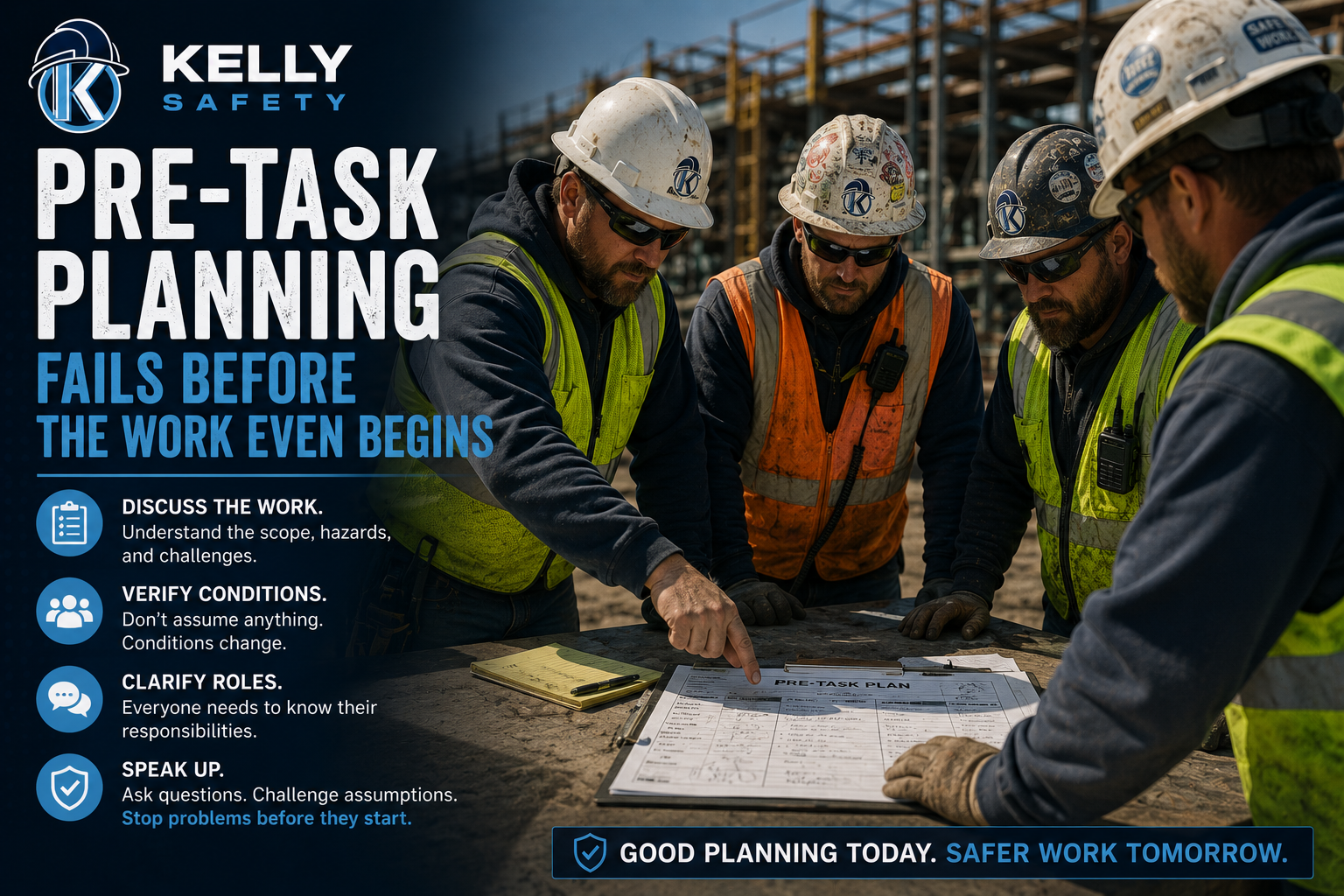
Effective pre-task planning requires crews to think critically about the work they are about to perform. It involves discussing changing conditions, identifying task-specific hazards, clarifying responsibilities, and understanding how today's work differs from yesterday's. The goal is not to complete paperwork. The goal is to improve decision-making before exposure occurs.
Conditions change faster than forms do
Construction, mining, and industrial environments are dynamic. Weather changes. Equipment moves. Contractors enter and leave work areas. Materials arrive. Priorities shift. The challenge is that many pre-task plans are completed once and never revisited. A document filled out at 7:00 a.m. may no longer accurately represent conditions by 10:00 a.m. If crews treat the plan as a one-time exercise instead of a living discussion, its value begins declining almost immediately.
The strongest teams understand that planning continues throughout the day. They reassess conditions, communicate changes, and adjust expectations as work evolves.
Assumptions are often the biggest hazard on the jobsite
Many incidents can be traced back to assumptions that were never challenged. Someone assumed equipment was isolated. Someone assumed another crew knew they were entering the area. Someone assumed conditions were unchanged from the previous shift. Someone assumed a hazard had already been addressed.
Pre-task planning is one of the most effective ways to expose assumptions before they create exposure. By discussing responsibilities, verifying conditions, and encouraging questions, crews create opportunities to identify gaps that might otherwise go unnoticed.
The value of the discussion often outweighs the value of the document itself.
The best plans focus on today's work, not generic hazards
Workers quickly recognize the difference between meaningful planning and repetitive paperwork. When discussions focus on generic hazards that could apply to any task, engagement drops. Workers stop listening because the conversation no longer reflects what they are actually doing.
The most effective pre-task plans are specific. They focus on today's scope, today's environment, today's equipment, and today's challenges. They address the hazards workers are most likely to encounter over the next several hours rather than repeating information everyone already knows.
Specificity creates relevance, and relevance creates engagement.
Leadership determines whether planning becomes culture
The effectiveness of pre-task planning is heavily influenced by leadership. If supervisors treat it as a box-checking exercise, crews will do the same. If leadership views planning as an operational tool, workers are far more likely to engage in the process.
The strongest leaders use pre-task planning to encourage discussion, challenge assumptions, and gather field-level insight from the people performing the work. They understand that planning is not simply about compliance. It is about creating a shared understanding before exposure begins.
That approach turns planning into a practical safety tool instead of an administrative requirement.
A final thought from the field
Most jobs do not become dangerous because workers lack skill. They become dangerous because exposure develops faster than crews recognize it. Pre-task planning is one of the few opportunities a team has to identify those exposures before work begins. When it is treated as a discussion instead of a document, it improves communication, strengthens coordination, and helps crews make better decisions throughout the day.
The best pre-task plans are not the ones with the most signatures.
They are the ones that change how the work is performed.