
A course card can be useful, but it is not the same thing as being trained for every task on a particular jobsite. The right starting point is to identify the work, hazards, worker role, and requirements set by the employer, project owner, or applicable authority.
Construction site safety training usually combines OSHA Outreach awareness education with topic-specific instruction and employer-provided, site-specific training. OSHA 10 is generally an awareness course for workers, while OSHA 30 is more appropriate for supervisors or workers with some safety responsibility. Outreach courses are voluntary under OSHA and do not replace hazard-specific training required by an employer or an OSHA standard.
Compare OSHA construction courses
That distinction makes course selection less confusing. Before comparing catalogs, sort out what the site and the worker actually require, then match the course format and subject matter to those needs.
Start with the site, not the course catalog
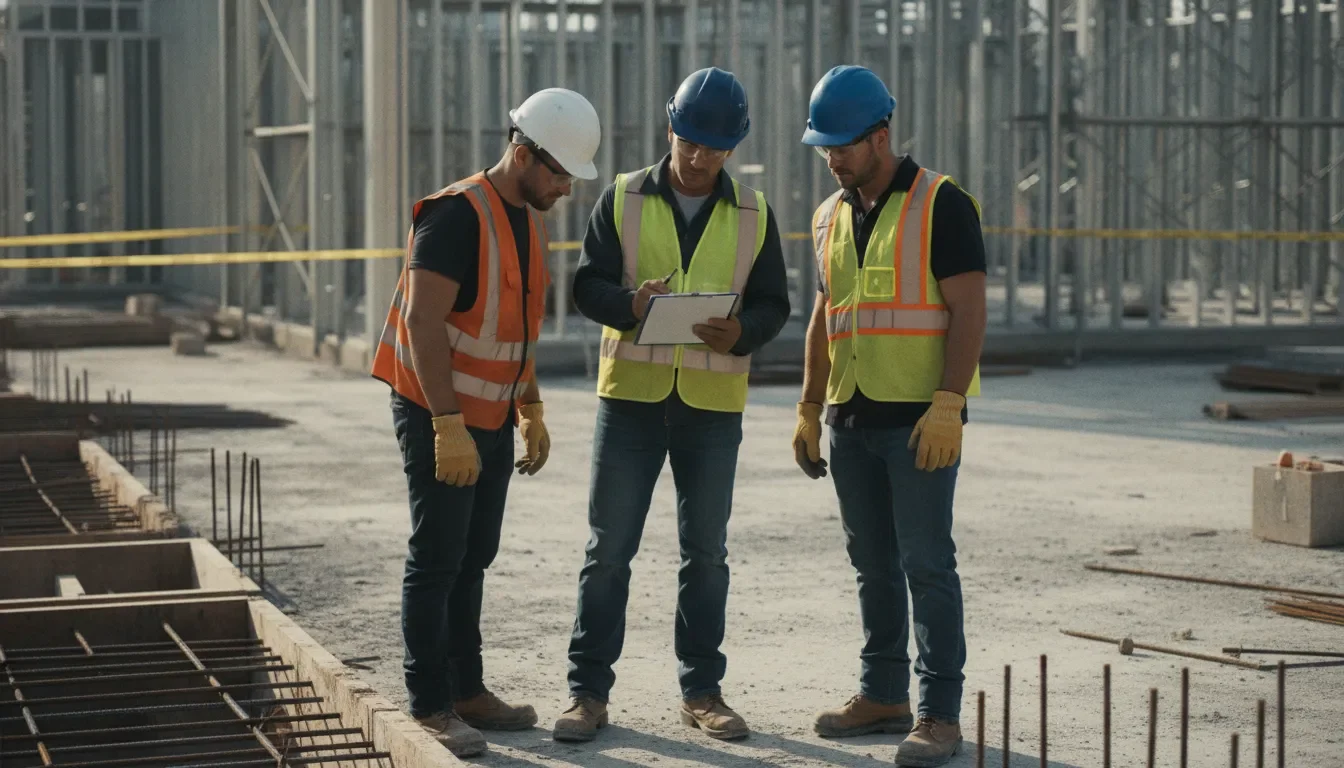
The right starting point is the work itself. Before opening a course list, describe what the crew does, where the work happens, and what could cause harm. A contractor pouring concrete, working from lifts, excavating, or coordinating several trades may need different supporting instruction than someone handling materials in a warehouse. The course should fit the worksite, not simply sound familiar.
Write down the hazards workers may encounter during the job. Include both routine exposures and conditions that change from day to day: falls, struck-by hazards, caught-in or caught-between hazards, electrical risks, trenching, scaffolding, equipment operation, heat, and required personal protective equipment. OSHA identifies falls, caught-in or caught-between, struck-by, and electrocution as the construction Focus Four. That awareness core is useful, but it does not replace the employer's responsibility to provide hazard-specific and site-specific instruction.
Next, identify who is asking for training. The request may come from an employer, general contractor, project owner, municipality, or another authority, and each may describe its expectations differently. Ask for the exact course name, industry track, language, delivery format, and any site or project requirement in writing. OSHA Outreach training is voluntary, although some employers, states, or municipalities may require it. OSHA also explains that Outreach courses are awareness training, not certifications, and do not by themselves satisfy every OSHA standard's training requirements.
Kelly Safety provides nationwide online workplace-safety training for contractors, employers, and workers. Its online courses are self-paced, while live virtual and on-site options are separate formats arranged for the applicable training need. Once the work, hazards, and request are clear, use the OSHA course options to compare the available track and supporting subjects. Do not assume that a completion card replaces orientation, equipment instruction, or other training required at the site.
What work will this person perform, and in which industry or setting?
Which hazards will the worker face, including task-specific or changing conditions?
Who requires the training, and what exact course or documentation do they specify?
Does the worker need English or Spanish instruction, and is self-paced, live virtual, or on-site delivery appropriate?
What additional site orientation or employer-provided hazard training is still required?
How construction site safety training is usually built
A strong training plan separates broad awareness from hazard-specific instruction and the guidance workers receive on a particular jobsite. Those layers support one another, but none should be treated as a substitute for the others.
OSHA Outreach awareness. OSHA Outreach courses introduce workers to hazard recognition, avoidance, abatement, and prevention, along with basic information about workers' rights and employer responsibilities. OSHA describes the program as voluntary. It is not a certification, and it does not satisfy the training requirements of any specific OSHA standard. Some employers, states, municipalities, or projects may still require an Outreach card, so check the rule that applies to your work. The 10-hour course is intended as awareness training for workers, while the 30-hour course is generally more appropriate for supervisors or workers with some safety responsibility.
You can read OSHA's Construction Focus Four Outreach packet before deciding whether it belongs in your plan.
Construction Outreach includes awareness of the Focus Four hazards.
Those hazards are falls, struck-by hazards, caught-in or between hazards, and electrocution.
That list is a starting point, not a complete site safety program.
For a focused overview, see Kelly Safety's Focus Four training guide.
Topic courses for the hazards present. Once you know the work and hazards involved, add instruction that addresses the actual tasks. A crew exposed to leading edges, roofs, ladders, or elevated platforms may need fall prevention training. A crew working around excavations may need trenching and excavation safety training. Scaffolding, demolition, personal protective equipment, and other topics may call for their own courses as well. This layer is more specific than general awareness, so select subjects based on the work rather than assigning every course to every worker.
Site-specific employer instruction. Workers also need to understand how safety works on this job, not just in a general construction setting. Employers should cover the site's procedures, equipment, access routes, emergency actions, and known hazards. They should also explain who gives direction and when a competent person must inspect conditions, make decisions, or stop work. A broad course can provide useful knowledge, but it cannot describe an employer's exact controls or replace instruction for the equipment and conditions workers will encounter.
Before work begins, match each layer to the crew's roles, tasks, and exposure. Then document the instruction and provide refreshers when conditions, equipment, or responsibilities change.
Match the course to the person and the work
The right OSHA Outreach course depends first on the work being performed. Construction, demolition, building development, and related field work point to the OSHA 10 Construction course. Manufacturing, warehousing, distribution, healthcare, and similar settings generally point to General Industry training instead. Choosing the track that matches the workplace gives the learner examples and hazard awareness that fit the job.
For many workers, the OSHA 10 option is the practical starting point. Kelly Safety offers OSHA 10 Construction as self-paced online access. The OSHA 10 General Industry course is the match for people whose work is outside construction. Crews that train in Spanish can use Spanish OSHA 10 Construction.
OSHA 30 Construction is a different fit. It is the course Kelly Safety offers for supervisors and people who have safety duties. A 30-hour course provides more time for workplace hazard topics than a 10-hour awareness course, so the learner's responsibilities matter as much as the industry.
Construction or demolition workers: Start with the Construction track, usually OSHA 10 for worker-level awareness.
Supervisors and people with safety responsibilities: Consider OSHA 30 Construction.
Manufacturing, warehousing, or similar workers: Choose OSHA 10 General Industry when the work is not construction.
Spanish-speaking construction crews: Review the Spanish OSHA 10 Construction option.
Confirm the current price and course details on the individual course page before enrolling. Kelly Safety's OSHA course hub states the current card wording in the next sentence.
Upon successful completion of the course, you will receive an official OSHA DOL card via mail.
The following sentence on that hub covers the certificate and the physical card.
Digital completion certificates are available immediately, while the physical card is typically delivered within 2 weeks.
The same hub states the provider relationship in the sentence below. That wording attributes the authorization to UL Solutions PureSafety. It does not say Kelly Safety is independently the OSHA provider. The course card is one part of a broader safety program. Employers and project owners may still require additional site-specific instruction.
OSHA Outreach courses are provided in partnership with UL Solutions PureSafety, an OSHA-authorized online Outreach provider.
The hub also names one state-specific option, and only in the sentence below.
We bring you online OSHA 10 and OSHA 30 courses, including actively proctored version satisfying the New York Local Law 196.
That sentence is limited to the actively proctored OSHA 10 and OSHA 30 courses on that page. It is not a claim that every construction project in New York accepts every course. Confirm the exact course with Kelly Safety if a project requires it. For a longer explanation of the difference between the cards and course lengths, read the OSHA 10 vs. OSHA 30 comparison.
What still has to happen on the jobsite
Course completion gives an employer a useful starting point, but it does not finish the training process. OSHA Outreach describes awareness education, and the employer still has to connect that education to the work, hazards, and procedures used on the specific site. A completion card is not a license, and it does not show that every hazard on a project was covered. As OSHA 10 is a starting point, not a safety program, follow-through belongs in the employer's jobsite planning.
Assign training by task and hazard. Start with the work each person will perform, not only the course someone happens to have completed. Consider the equipment, materials, elevations, excavations, traffic, and other exposures connected to the assignment. A worker entering one area may need different instruction from a supervisor coordinating several crews. Review the employer's requirements, the project specifications, and any applicable standard before deciding who needs which course or topic.
Connect the lessons to site procedures. Explain how the site's orientation, hazard communication, emergency plan, PPE rules, reporting process, and daily controls apply in practice. General awareness training can introduce concepts, but workers also need to know which procedures, contacts, and controls their employer expects them to use at this location.
Arrange practice or supervision when needed. If a standard, project rule, or employer policy calls for a demonstrated skill, schedule hands-on practice, an evaluation, or qualified supervision. Online lessons may support the learning, but they should not be treated as proof that a person can safely perform every task. Employers comparing a live class can review these on-site training considerations alongside the needs of the crew and site.
Record what each person completed. Keep a practical record showing the worker, course or topic, completion date, instructor or provider when relevant, and any orientation, practice, or evaluation that followed. Update it when assignments change or refresher training is due. For crews that need continuing refreshers, toolbox talks, and record reminders, membership support can help with ongoing administration. When an employer needs help writing a site plan or coordinating training, consulting support is another option.
A short checklist before you enroll
Confirm what the project requires. Ask the employer, general contractor, or project owner which course, card, language, and completion record they will accept. A course can be useful without satisfying every project or employer requirement, so get the answer before enrolling.
Identify the industry track. Is the work construction, demolition, building development, or a related field? Or is it manufacturing, warehousing, distribution, healthcare, or another general-industry setting? Choose the track that matches the work rather than assuming that any OSHA course will fit.
Match the course to the person's role. Is this person a worker who needs broad hazard awareness, or does the person supervise work or carry safety responsibilities? That distinction can affect whether an OSHA 10 or OSHA 30 course is the appropriate starting point. It does not eliminate the employer's responsibility to provide training for the hazards employees face.
Check the language requirement. If the worker or crew learns more effectively in Spanish, confirm that a Spanish-language option is available before you register. Make sure the selected course is the language the worker can understand and use on the job.
Choose the delivery format. Self-paced online training may be practical for one worker or a small crew working around changing schedules. If the project needs discussion, demonstrations, or direct review of site conditions, compare it with a live virtual or on-site session. See these online OSHA training options for small contractors before deciding.
List hazards that need more than awareness. An awareness course is not a substitute for topic-specific or site-specific instruction. Consider the hazards actually present, such as falls, scaffolds, trenches, or changing site conditions. Kelly Safety's construction safety awareness course can be an extra hazard-recognition course, not a substitute for OSHA Outreach or required employer instruction.
Decide who will keep the record. Before anyone starts, assign responsibility for saving the completion certificate or card and documenting any additional training. The employer or contractor should also track site orientation and hazard-specific instruction separately, so one course record does not become the entire safety file.
If you already know the track your site wants, review the OSHA course options or call (205) 202-0882.
Frequently Asked Questions
What should a contractor confirm before choosing construction site safety training?
Confirm the work, the person's role, and the exact course the employer or project will accept. Construction work points to a Construction track. A worker usually starts with awareness training, while a supervisor or someone with safety duties may need the longer course. Also ask whether the project wants a specific language, a proctored class, or extra site instruction. An Outreach card is not a certification, and it does not replace the training an OSHA standard or the employer still requires.
What does OSHA Outreach training cover?
Construction Outreach includes awareness of the Focus Four hazards: falls, struck-by hazards, caught-in or caught-between hazards, and electrocution. OSHA's Construction Focus Four packet says this module is required in both the 10-hour and 30-hour Construction Outreach classes. It is awareness training. It is not a certification, and it does not describe this job's procedures or equipment. (Source: OSHA Construction Focus Four Outreach packet.)
Does completing a course make a construction site safe?
No. Training can help workers recognize hazards and understand responsibilities, but the employer still has to manage hazards on the job site. That includes providing the site-specific direction, controls, supervision, equipment, and additional training required for the work. A course completion card is not a substitute for an employer's safety program or the training required by a specific OSHA standard.
Is the 20/20/20 rule an OSHA construction training requirement?
No. The 20/20/20 rule is not an OSHA construction training requirement. Before relying on a rule or checklist found online, confirm the applicable OSHA standard and any project, employer, state, or municipal requirement for the work being performed.
Ready to compare OSHA courses?
Choosing the right course starts with confirming what your construction site or employer is asking for. Compare the OSHA 10 and OSHA 30 construction courses to review the available options and choose the training that matches your needs. When you are ready, compare the OSHA courses and confirm the one you need before you register.
