
Knowing how to prevent accidents on a construction site starts with the work in front of the crew, not with a binder that sits in the trailer. A floor opening, a backing truck, a damaged cord, or an unsecured load can hurt someone before the weekly meeting ever happens. The useful question is simple. What will we check, correct, and write down before this task starts?
If your crew needs a practical place to start, call Kelly Safety at (205) 202-0882.
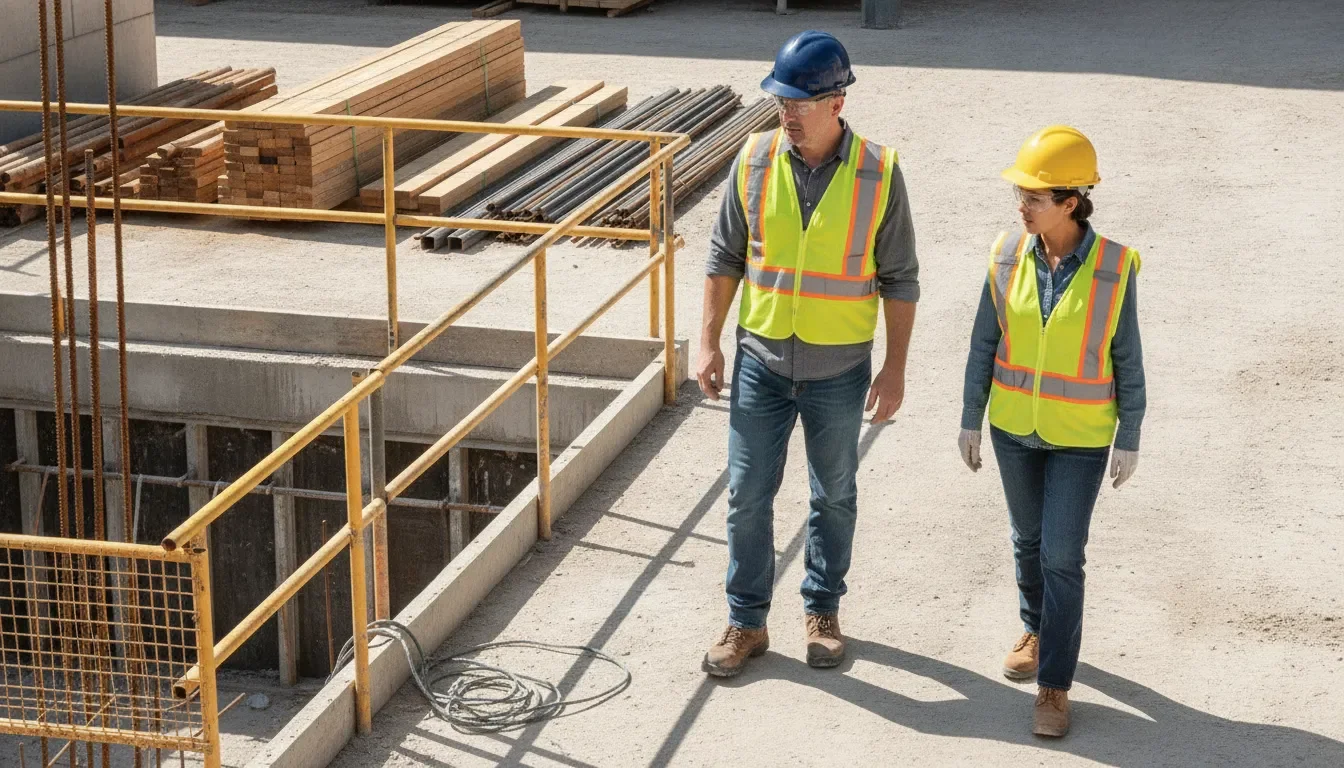
Kelly Safety is a nationwide training and contractor-support provider based in Birmingham, Alabama. The team offers self-paced online OSHA and MSHA courses, Spanish-language options where a course is offered in Spanish, and consulting that includes jobsite audits and field inspections. Training builds recognition. It does not replace the employer's duty to instruct people for the work they actually do, or the competent person's look at the site that day.
Start with the task, not a generic list
A prevention routine fails when it treats every job the same. A roofing crew, a concrete crew, and a crew setting steel do not share the same first hazard. Before anyone picks up a tool, name the task, the location, and what changed since yesterday. Weather, a new subcontractor, a delivery, or a revised sequence can make yesterday's plan wrong.
Ask four questions out loud:
What can fall, strike, pinch, or shock someone during this task?
Who is exposed, including visitors and people working below or beside the task?
What control is already in place, and is it still intact?
Who stops the work if that control is missing?
Write the answers where the crew can see them. A pre-task note on the daily report is enough when it names the hazard and the control. A vague line such as "be safe" does not tell the next shift anything.
OSHA's construction rule at 29 CFR 1926.21 says the employer shall instruct each employee in the recognition and avoidance of unsafe conditions, and in the regulations that apply to that work. A classroom course can support that duty. It does not finish it. The instruction has to match the task, the substances, and the conditions on that job.
Use the four hazards as a daily filter
OSHA's Focus Four are falls, struck-by, electrocution, and caught-in or caught-between hazards. OSHA identifies these as leading causes of construction fatalities. Kelly Safety's OSHA Focus Four course walks through those hazards in self-paced online modules, including how they show up on a job and what a control looks like. Use the same four as a filter on the walk, even if nobody is enrolled that week.
Falls
Look at edges, ladders, scaffolds, floor holes, and any place a person or a tool can drop to a lower level. A guardrail that was up at 7 a.m. may be down by noon because a load needed to pass. Covers need to be secured and marked. A harness in the gang box does not protect anyone until the anchor and the clearance are right for that location. Fall prevention training, such as Kelly Safety's fall prevention course, can teach the categories. The crew still has to match the control to the opening in front of them.
Struck-by
Separate people from moving equipment, swinging loads, and falling materials. Set a spotter before a truck backs into a tight area. Stack lumber and pipe so a bump does not send them into a walkway. The struck-by hazards course covers flying, falling, swinging, and rolling objects. On site, the test is whether the path and the landing zone are actually clear.
Electrocution
Treat overhead lines, damaged cords, missing ground pins, and wet conditions as reasons to pause and assess the setup before work continues. Remove damaged equipment from service, maintain required clearances from lines, control moisture and electrical exposure, and have the employer's qualified person determine the controls for the task. Do not open a panel or make a repair unless you are qualified and authorized to do so.
Caught-in or between
Unguarded moving parts, a trench without protection, and a load that can shift will not give a warning. If an excavation is part of the work, the employer's competent person has to judge the soil, the protection, and the changing conditions. Do not treat a blog checklist as that judgment. Stop and get the person the employer assigned.
Put a control in place before the work continues
Recognition is only the first half. The second half is a control that changes the exposure. Pick the strongest control that the task allows, then check that people can actually use it.
Eliminate the hazard where feasible. Redesign the sequence, remove unnecessary material, or reroute the work so the exposure no longer exists.
Guard or isolate hazards that remain. Securely cover the hole, rail the edge, barricade the swing radius, or add a shield the manufacturer allows.
Change how the task is done. Take damaged tools out of service, add a spotter, break the lift into smaller pieces, or wait for the area below to clear.
Use personal protective equipment for what remains. Hard hats, eye protection, high-visibility vests, and gloves are the last layer, not the plan.
Tell the people who are exposed what changed, including crews working nearby.
OSHA's accident-prevention rule at 29 CFR 1926.20 makes the employer responsible for programs needed to comply with the construction standards. Those programs must provide for frequent and regular inspections of the job site, materials, and equipment by competent persons the employer designates. The same rule prohibits use of noncompliant tools and equipment until they are identified as unsafe by tagging or locking the controls to make them inoperable, or physically removed from the place of operation. A cracked ladder that stays in the rack is still available, which means it is still a problem.
A job hazard analysis is one way to write the control down before a non-routine task. Kelly Safety's job hazard analysis course covers the stages of that process and how to choose controls. Use it when the task is new or the sequence changed. You do not need a fresh analysis for every routine trip across the site, but you do need one when the work is different from yesterday.
Walk the site on a schedule you will keep
An inspection that happens only after an injury is a record, not prevention. Build a short walk into the day, then a deeper look into the week. The point is to find the condition while you can still correct it.
On a daily walk, check the items that move:
Housekeeping in walkways, stairs, and material landings.
Guardrails, hole covers, and ladder condition.
Cords, temporary power, and clearance from lines.
Equipment horns, alarms, and the space around moving machines.
Personal protective equipment that matches the task, and whether people are wearing it.
Any open correction from the day before.
On a weekly look, add the items that drift: scaffold tags, fire extinguishers, first-aid supplies, and whether new workers received the instruction for their task. If the project has several employers, agree on who walks which area. A gap between two contractors is a common place for an unguarded opening to sit all day.
When you want a fuller review of programs, records, and closure, use a separate audit. Kelly Safety's guide to construction safety inspections and safety audits covers how to scope a review, gather evidence, and track findings to closure. That page owns the audit. This one stays with the daily prevention routine. If you want an outside set of eyes, Kelly Safety's consulting team also performs jobsite audits and field inspections and turns what it finds into practical recommendations. An outside audit still does not transfer the employer's duty to run the program.
Correct it, then write the smallest useful record
A hazard that is named and left in place will be there for the next crew. Decide in the moment whether the correction is immediate or scheduled, and who owns it.
Immediate means the work stops until the control is in place. An unguarded floor hole, a backing vehicle with no spotter in a tight area, a damaged cord in use, and an unprotected trench are immediate. Scheduled means the condition is controlled for now and a person with a due date will finish the repair. "We will get to it" is not a schedule.
The record does not need to be long. A useful note has five parts:
Date, time, and location.
What you saw, in plain words.
What you did right then.
Who owns anything still open, and by when.
How you will confirm it is done.
Keep private medical details out of the daily note. If someone is hurt, follow the employer's injury-response and OSHA recording rules. Those rules are a different process from this prevention walk. Kelly Safety's accident investigation course covers preserving a scene, collecting information, finding causes, and choosing corrective actions after an event. Use that path after an incident. Use the daily walk so fewer events reach it.
Share the open items at the next huddle. People cannot avoid a condition they were not told about. If the same item appears three days in a row, the control is wrong or nobody owns it. Change one of those two things. Do not add another poster.
Train for the hazard, then check the work itself
Training is part of prevention only when it matches the person and the task. An entry-level construction worker often starts with OSHA 10-hour Construction Outreach training. Kelly Safety's OSHA 10 Construction course is self-paced and online. Workers who complete it receive an OSHA Outreach student course completion card issued through the U.S. Department of Labor Outreach Training Program. That card is not a license, not an "OSHA certification," and not proof that a specific site is safe.
Supervisors may need a longer Outreach course, such as OSHA 30-hour Construction. Other people need a short module on one hazard, such as Focus Four, fall prevention, struck-by hazards, or job hazard analysis. Spanish-language courses are available for some OSHA topics, not for every course. Check the live course page before you tell a crew a language or a format is offered.
A course does not decide which control fits today's opening, trench, or line. The employer still has to instruct each person for the work environment, and a competent person designated by the employer still has to inspect the site, materials, and equipment. For how to choose a course without treating the catalog as the safety plan, read Kelly Safety's construction site safety training guide. For what Focus Four training includes and what it cannot do, read the Focus Four training guide.
After training, watch the work. If people still walk under a suspended load or skip a cover, the fix is coaching and a change in the setup, not another login. Ask what got in the way. Sometimes the harness does not fit the anchor. Sometimes the schedule pushed the crew to skip a step. Fix the condition, then confirm the step happens on the next shift.
How to prevent accidents on a construction site tomorrow
Use this sequence on the next shift. It is a field routine, not a legal determination and not a substitute for the employer's program.
Name the tasks for the shift and what changed overnight.
Walk the four hazards: falls, struck-by, electrocution, and caught-in or between.
Stop any task that has no control. Assign the control before work resumes.
Tag or remove tools and equipment that are not fit for use.
Tell every exposed crew what you found, including contractors working next to you.
Write the date, the condition, the immediate fix, the owner, and the due date.
Check yesterday's open items before you add new ones.
Send new workers to task-matched training, then watch the work itself.
If the same hazard keeps returning, look past the symptom. A missing rail may mean deliveries have no landing zone. A damaged cord may mean there is no place to hang temporary power. A near miss that never gets discussed will come back as an injury. Bring the pattern to the person who can change the setup.
Contractors who want help building the routine, the talks, or the site plan can start with training for the crew and consulting for the program. Call (205) 202-0882 and say which trades are on the job and which hazards keep showing up. Kelly Safety can point you to a self-paced course or to audit and inspection support. The employer still owns the program, the instruction, and the competent-person inspections.
Frequently asked questions
What is the most effective way to prevent accidents?
Remove the hazard or guard it before the task starts, then check that the control is still in place during the shift. Reminders and posters help only after the physical control exists. Training supports the routine. It does not replace it.
What safety measures are needed on a construction site?
Start with the four serious hazards: falls, struck-by events, electrocution, and caught-in or between events. Add housekeeping, fit-for-use tools, and instruction that matches each task. The exact measures depend on the work. A trench, a roof, and a interior build-out do not share one list.
How often should a construction site be inspected?
OSHA's construction rule requires frequent and regular inspections of the job site, materials, and equipment by competent persons the employer designates. Many crews do a short daily walk and a deeper weekly look. Inspect again when the weather, the sequence, or the crews change. A written program should say who walks and what they record.
Does a training card mean the site is protected?
No. An OSHA Outreach card shows that a person finished a voluntary awareness course and received a student course completion card. It is not a professional license and it does not prove that today's controls are in place. The employer still instructs people for their tasks, and someone designated by the employer still inspects the site.
What should a small crew write down?
Write the date and place, what you saw, what you fixed immediately, who owns anything still open, and when you will check it. Skip medical details. If the same item stays open, change the owner or the control. A note nobody reads is not a prevention program.
Want help matching a course or an inspection routine to the work you actually do? Call Kelly Safety at (205) 202-0882 or visit the contact page.
