

Safety blog
Kelly Safety Blog – Safety Insights for OSHA, MSHA & Jobsite Culture
Welcome to the Kelly Safety Blog: your source for OSHA/MSHA updates, thinking tools, hazard prevention strategies, and safety culture insights tailored for contractors and safety professionals.

OSHA 10 vs OSHA 30: Which Card Do You Need?
Compare OSHA 10 and OSHA 30 by audience, course hours, topics, cost, and job requirements so you can choose the training that fits your role.

MSHA Training in Spanish: What Crews Need to Know
Learn how to choose Spanish-language MSHA training, distinguish Part 46 from Part 48, and confirm that each miner understands required safety instruction.

OSHA injury recording and reporting training: Key Rules
Learn the key OSHA injury recording and reporting rules, forms, deadlines, privacy requirements, and training practices employers can use to keep records accurate.

MSHA Part 48 Training: Who Needs It and What It Covers
MSHA Part 48 training covers safety requirements for miners and contractors. Find out who needs it, what’s included, and how to meet compliance.

OSHA Training Requirements: A Practical Employer Guide
Get clear answers on OSHA training requirements for employers. Learn how to match training to hazards, track completions, and keep your team safe.

OSHA Training Online: What to Know Before You Enroll
Get clear answers about OSHA training online, including course options, requirements, and what to expect before you enroll in your next safety course.

OSHA Compliance: A Practical Guide for Employers
Get clear, actionable steps for OSHA compliance. Learn employer responsibilities, training tips, and recordkeeping essentials to keep your workplace safe.

MSHA Training: Part 46 vs. Part 48 Explained
Get clear answers on MSHA training requirements. Learn the differences between Part 46 and Part 48, and find out which rules apply to your mining job.
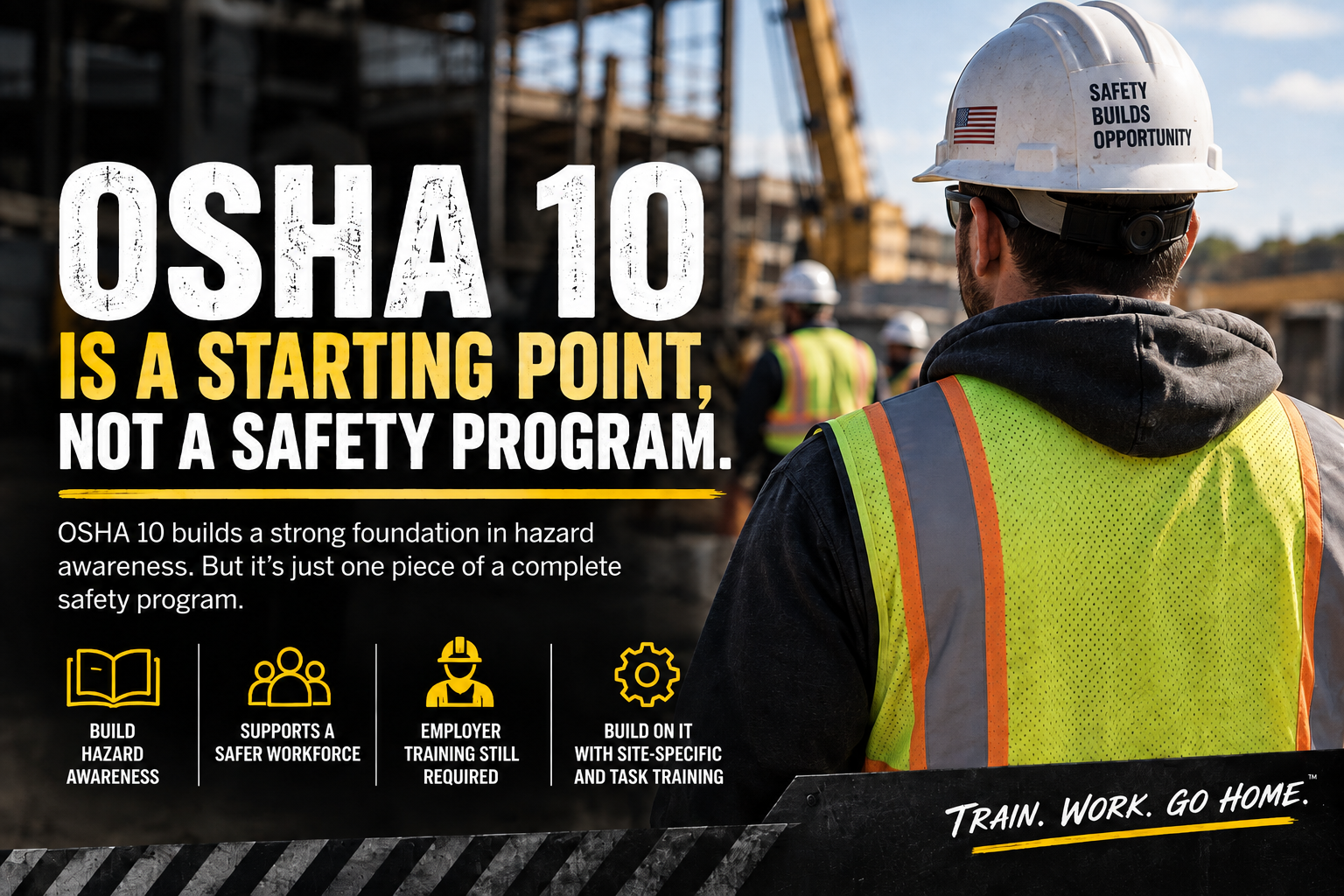
OSHA 10 Is a Starting Point, Not a Safety Program
OSHA 10 provides workers with an important foundation in hazard recognition and workplace safety, but the training was never intended to replace employer, jobsite, or task-specific training. Here’s why contractors should treat OSHA 10 as the starting point for building a safer, better-prepared workforce.

Lockout/Tagout Fails When the Procedure Doesn't Match the Work
A written Lockout/Tagout program can look complete on paper and still fail in the field. When equipment changes, procedures become outdated, or experienced employees begin relying on shortcuts, dangerous gaps can develop between the program and the work. Here's why effective LOTO depends on accurate procedures, proper training, and verification before maintenance begins.

OSHA’s HazCom 2024 Update: What Employers Need to Do Before November 2026
OSHA's updated Hazard Communication Standard is moving into employer implementation, with an important deadline approaching on November 20, 2026. Employers should review workplace labels, written HazCom programs, Safety Data Sheets, and employee training to determine what updates are necessary as revised hazard information reaches the workplace. Here's what contractors and employers need to understand about HCS 2024 and the next phase of compliance.

The Fallacy of "Quick Maintenance": Why Lockout/Tagout Failures Continue to Drive Severe OSHA Citations
Skipping Lockout/Tagout steps for "quick fixes" remains one of the primary drivers of severe OSHA citations and catastrophic machinery injuries. This article breaks down the operational differences between machine guarding and true zero-energy isolation, the hidden risks of stored kinetic energy, and how contractors and facility managers can build compliant, practical energy control programs that safeguard workers and protect the bottom line.

Safety Doesn't Work If Workers Don't Understand It
A safety program is only effective if workers understand the information being communicated. As the construction, mining, and industrial workforce continues to evolve, providing safety training in a language employees understand has become essential for improving communication, strengthening compliance, and reducing risk. This article explores why Spanish-language safety training is more than a convenience—it is an investment in safer jobsites, stronger teams, and better workforce development.

Why Confined Spaces Remain One of the Most Dangerous Work Environments on Any Jobsite
Confined spaces remain one of the most dangerous work environments in construction, mining, and industrial operations because many of the hazards cannot be seen. Atmospheric hazards, engulfment risks, energized equipment, and difficult rescue situations can quickly turn routine work into a life-threatening emergency. A strong confined space entry program, proper training, and thorough planning help organizations identify hazards, improve consistency, and ensure workers have the tools and procedures necessary to perform confined space work safely.

Why Your New Hire's First Day Sets the Tone for Everything That Follows
A new employee's first day is one of the most important opportunities to establish your company's safety culture. Effective new hire orientation goes far beyond completing paperwork or meeting compliance requirements. It introduces expectations, reinforces safe work practices, and gives employees the knowledge and confidence they need before stepping onto the jobsite. Organizations that invest in a consistent onboarding process build stronger teams, improve documentation, and create a safer foundation for long-term success.

Why the Best Safety Training Is an Investment, Not an Expense
Training is often viewed as a cost of doing business, but the most successful organizations see it differently. Effective safety training does more than satisfy compliance requirements. It builds knowledge, develops confidence, improves decision-making, and prepares employees for future opportunities. Companies that invest in workforce development are not simply meeting regulations; they are strengthening their teams, supporting long-term growth, and creating safer, more productive operations for years to come.

Improving Safety Through Membership: Why Ongoing Safety Management Outperforms One-Time Training
Safety training is essential, but training alone does not manage risk. Hazards evolve, crews change, and compliance requirements continue long after a course is completed. That's why more contractors are turning to membership-based safety support to help maintain consistency, strengthen documentation, support supervisors, and keep safety programs active throughout the year. The most effective safety programs are not built around a single training event. They are built around ongoing systems that support workers, supervisors, and operations every day.

The Evolution of Safety Training: Online, Virtual, and In-Person Learning
Technology has transformed how safety training is delivered, giving contractors more flexibility and access than ever before. Online learning, Live Virtual Instructor-Led Training (VILT), and traditional classroom instruction each serve a valuable purpose, allowing companies to choose the training format that best fits their workforce, schedule, and operational needs. As training continues to evolve, organizations now have more opportunities to develop employees, maintain compliance, and build safer workplaces without the limitations that once made workforce training difficult to access.

Why Good Contractors Get Disqualified Before Work Ever Begins
Many contractors assume they lose work because of price, scheduling, or competition. In reality, opportunities are often lost long before proposals are reviewed. Safety documentation, training records, contractor qualification requirements, and written programs frequently shape a client's first impression. Companies that are prepared before documentation is requested create confidence, while those scrambling to assemble records may never make it to the next stage of the conversation.

Why Every Contractor Working at a Mine Needs an MSHA Part 46 Training Plan
Many contractors do not realize they need an MSHA Part 46 Training Plan until a mine operator asks for it. What should be a simple documentation request often turns into a last-minute scramble to build a compliant program from scratch. Understanding what a Part 46 Training Plan requires, why mine operators request it, and how to develop one before it is needed can save contractors time, improve professionalism, and help ensure compliance.